SK Hynix Shares Plunge 15% After Nasdaq Debut
SK Hynix shares fell more than 15% in trading today, marking the largest one-day decline on record. This drop followed a significant rally in share prices after the company's Nasdaq debut last week, prompting investors in Seoul to cash out. The decline in SK Hynix's shares, alongside those of rival Samsung Electronics, contributed to a 9% plunge in the Kospi index, leading to a 20-minute trading halt. After trading resumed, Korean stocks continued to decline, despite President Lee Jae Myung's announcement of government support for major projects in chips, artificial intelligence data centers, and physical AI.
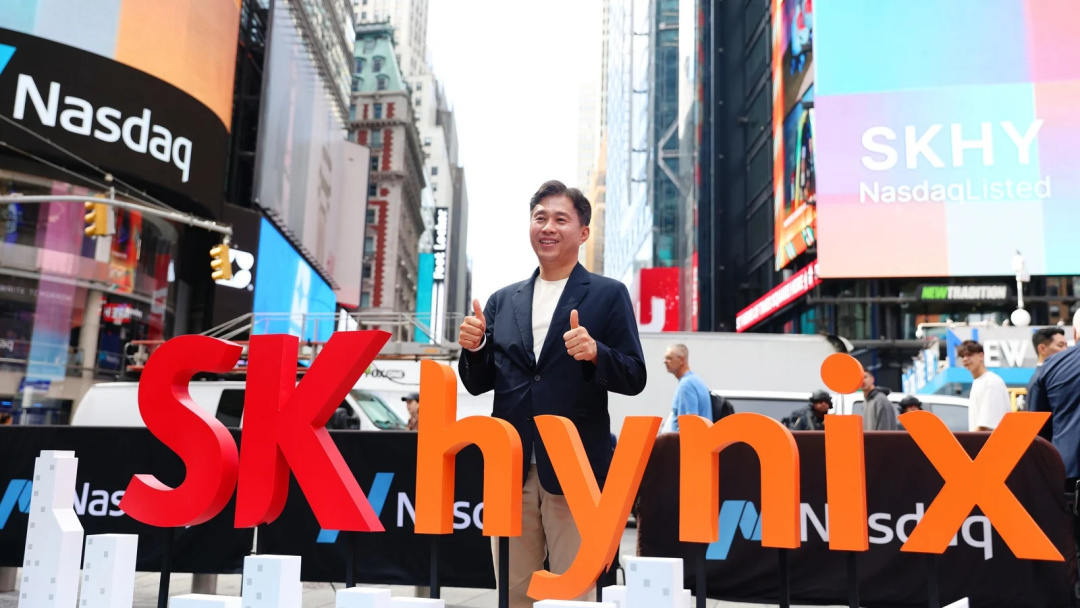
Last week, SK Hynix raised over $26 billion by selling American Depositary Receipts (ADRs) priced at $149 each, following a year in which its Korean shares more than tripled. The ADRs opened 14% above the offer price at $170 and ended their first trading day with a 12.8% gain. However, volatility in SK Hynix shares has surged this year, as the company has become a target for global investors betting on sustained profit increases from a shortage of high-bandwidth memory chips used in AI data centers. Many investors have utilized leveraged exchange-traded funds, amplifying both returns and losses.
For Your Trading Desk
Sponsor Spike Success.
After the sell-off in the Seoul market, SK Hynix's US ADRs, which represent one-tenth of a share and closed at $168 on Friday, were trading at approximately a 37% premium to its South Korean share price. James Ooi, a market strategist at Tiger Brokers in Singapore, noted that companies with listings in both the US and their home markets often trade at a premium in the US due to broader investor access, deeper liquidity, and stronger valuation support. However, he pointed out that arbitrage opportunities are limited by challenges in converting Korean shares to ADRs.
Ryu Young-ho, a senior analyst at NH Investment & Securities, indicated that the profit-taking was a response to the conclusion of the US listing. He also mentioned that investor sentiment was affected by caution regarding SK Hynix's second-quarter earnings. Expectations had been for increased shipments of SK Hynix's HBM4 chips from the second quarter, but this increase has not materialized at scale. Additionally, Ryu noted that investors have moderated their earnings expectations, as SK Hynix, with its greater exposure to the HBM market compared to Samsung Electronics, is likely to benefit less from a recent rise in prices for conventional DRAM chips.
According to Counterpoint Research data, SK Hynix led the market for high-bandwidth memory chips with a 58% revenue share in the first quarter, while Samsung and US competitor Micron Technology each held 21%. HBM chips are primarily utilized in artificial intelligence systems for major clients such as Nvidia and Alphabet's Google.