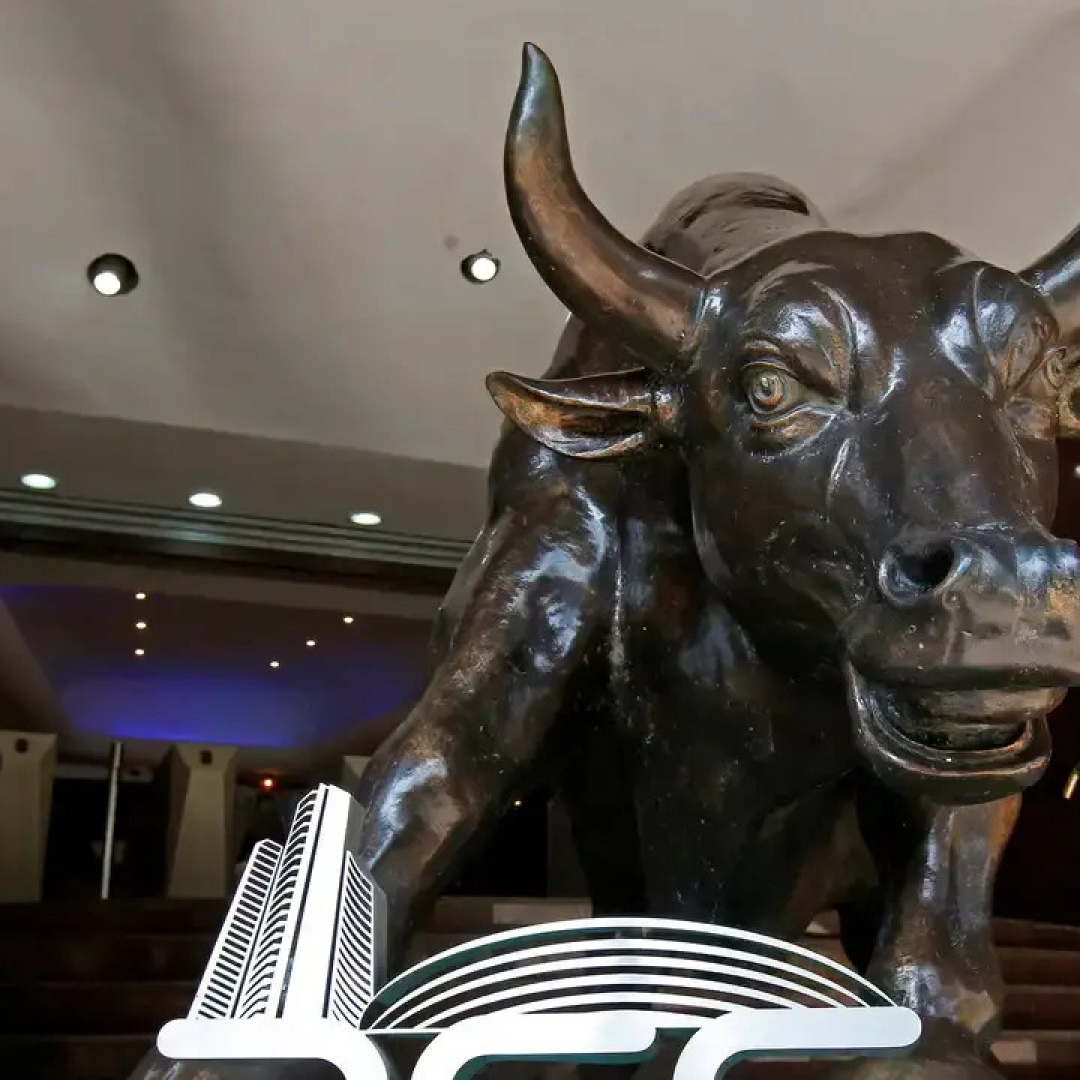
Sensex Opens 500 Points Lower as Asian Markets Struggle

Asian equities struggled to maintain gains in early trading as uncertainty surrounding geopolitical tensions and concerns over artificial intelligence weighed on market sentiment. The MSCI index for Asia-Pacific shares outside Japan fell by 0.2%, marking a potential fourth consecutive weekly decline. Japan's Nikkei index lost earlier gains, trading 0.4% lower, while South Korean shares dropped over 1%. In the broader regional market, Hong Kong's Hang Seng index declined by 2.09%, South Korea's Kospi fell by 1.92%, and Shenzhen lost 1.41%. Shanghai's index was down by 0.69%, and Australia's ASX 200 slipped by 0.47%. These mixed to negative signals come as investors assess geopolitical risks and their potential impact on oil prices and global market sentiment.
Oil prices experienced an uptick on Thursday following fresh Houthi attacks in Saudi Arabia, prompting the United States to order some diplomats and their families to evacuate from the kingdom. Brent crude futures rose by $1.29, or 1.2%, reaching $110.11 per barrel, while US West Texas Intermediate crude increased by 97 cents, or 1%, to $98.12. This escalation follows attacks on various targets in Saudi Arabia, including a civilian airport in Dammam, which resulted in one fatality and eight injuries, as well as a drone strike on an oil field that claimed two lives. Iran's foreign minister stated that the country is prepared to defend itself, while President Masoud Pezeshkian expressed skepticism about the possibility of dialogue amid US pressures. These developments have heightened uncertainty regarding regional security and energy supplies.
For Your Trading Desk
Sponsor Spike Success.
The Indian rupee strengthened by 53 paise, closing at 94.38 against the US dollar on Wednesday, buoyed by foreign currency inflows linked to Reliance Industries' Jio Platforms IPO and intervention from the Reserve Bank of India. The currency opened at 94.78, reached an intraday high of 94.35, and a low of 94.82 before settling at its strongest level in about six weeks. However, weak domestic equities and elevated crude oil prices continue to pose risks to the currency's gains. Anuj Choudhary, a research analyst at Mirae Asset Sharekhan, noted that the rupee could maintain a positive bias amid a broadly weaker dollar and softer US Treasury yields. The USD-INR spot rate is expected to trade within a range of Rs 94.20 to Rs 94.80.
Market Decline Reflects Broader Investor Caution Amid Selling Pressure
Benchmark indices closed lower on Wednesday for the second consecutive session, as selling pressure in power, banking, and financial stocks offset early gains. The BSE Sensex declined by 143.21 points, or 0.19%, settling at 73,709.69, despite rising as much as 829.29 points to an intraday high of 74,682.19 before noon. Profit booking led the index to drop more than 1,450 points from its high to a low of 73,229.45, although some late buying helped it recover slightly. The NSE Nifty50 fell by 77.60 points, or 0.34%, closing at 22,811.35 after fluctuating between 23,120.90 and 22,702.85. Midcap and smallcap indices also saw declines of approximately 1.5% to 2.4%, reflecting a broader risk aversion in the market, according to Ajit Mishra, SVP of Research at Religare Broking.