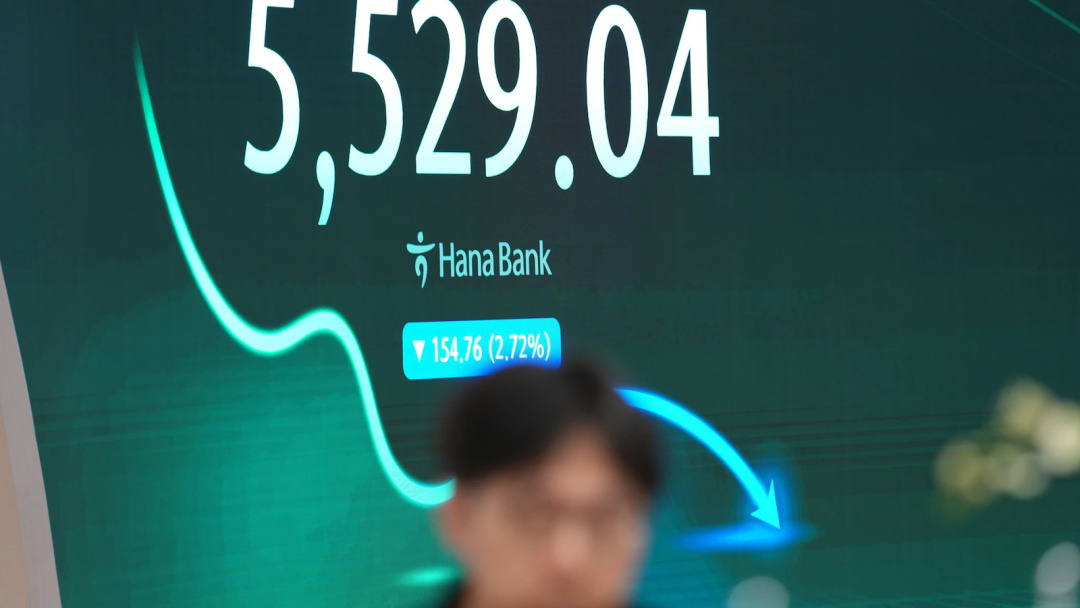
South Korean Kospi Index Falls 7.5%, Triggers Trading Halt

On Thursday, South Korea's stock market experienced a notable decline, with the benchmark Kospi index plummeting by 7.49%. This downturn was largely attributed to intense selling pressure on major technology stocks, particularly Samsung Electronics and SK Hynix. The decline prompted the Korea Exchange to implement a five-minute trading halt on program sell orders following a sharp drop in index futures.
The Kospi fell by 450.02 points, settling at 5,558.79, marking its longest losing streak since September 2024, with losses accumulating over seven consecutive sessions. Since reaching a record high in June, the index has now decreased by nearly 35%. The sell-off in South Korea's market was part of a broader trend affecting Asian equities, which followed a technology-driven decline on Wall Street. Concerns over rising U.S. consumer price inflation, which exceeded expectations in September, have heightened fears that the Federal Reserve may increase interest rates later this year, further pressuring technology and AI-related stocks.
For Your Trading Desk
Sponsor Spike Success.
In South Korea, major technology firms faced significant losses, with Samsung Electronics shares dropping 9.05% and SK Hynix falling 11.06%. Other companies also saw declines, including LG Energy Solution, which lost 3.44%, and Hyundai Motor, which fell by 3.99%. The negative sentiment extended to other Asian technology firms, with Taiwan Semiconductor Manufacturing Company (TSMC) down 2% and Japan's Kioxia Holdings plunging over 11%.
Negative Market Breadth Signals Investor Caution in South Korea
Market breadth in South Korea was heavily negative, with 768 of the 889 stocks traded declining. Foreign investors sold shares worth a net 355.6 billion won. In currency markets, the South Korean won strengthened slightly against the dollar, trading at 1,339.5 won per dollar.
Market Mechanisms Activate Amid Kospi's Sharp Decline
The sharp decline in the Kospi triggered the activation of a sell-side "sidecar," an automatic mechanism designed to temporarily cool trading during periods of heavy selling. This measure suspends program sell orders for five minutes after significant losses in index futures. The current market conditions have raised concerns among retail investors, particularly following a sell-off in July that saw the index fall around 20%. The ongoing volatility in the market reflects a broader reassessment of the outlook for technology companies sensitive to borrowing costs.
As the situation develops, investors will be closely monitoring both domestic and international economic indicators that could influence market sentiment and trading strategies moving forward.