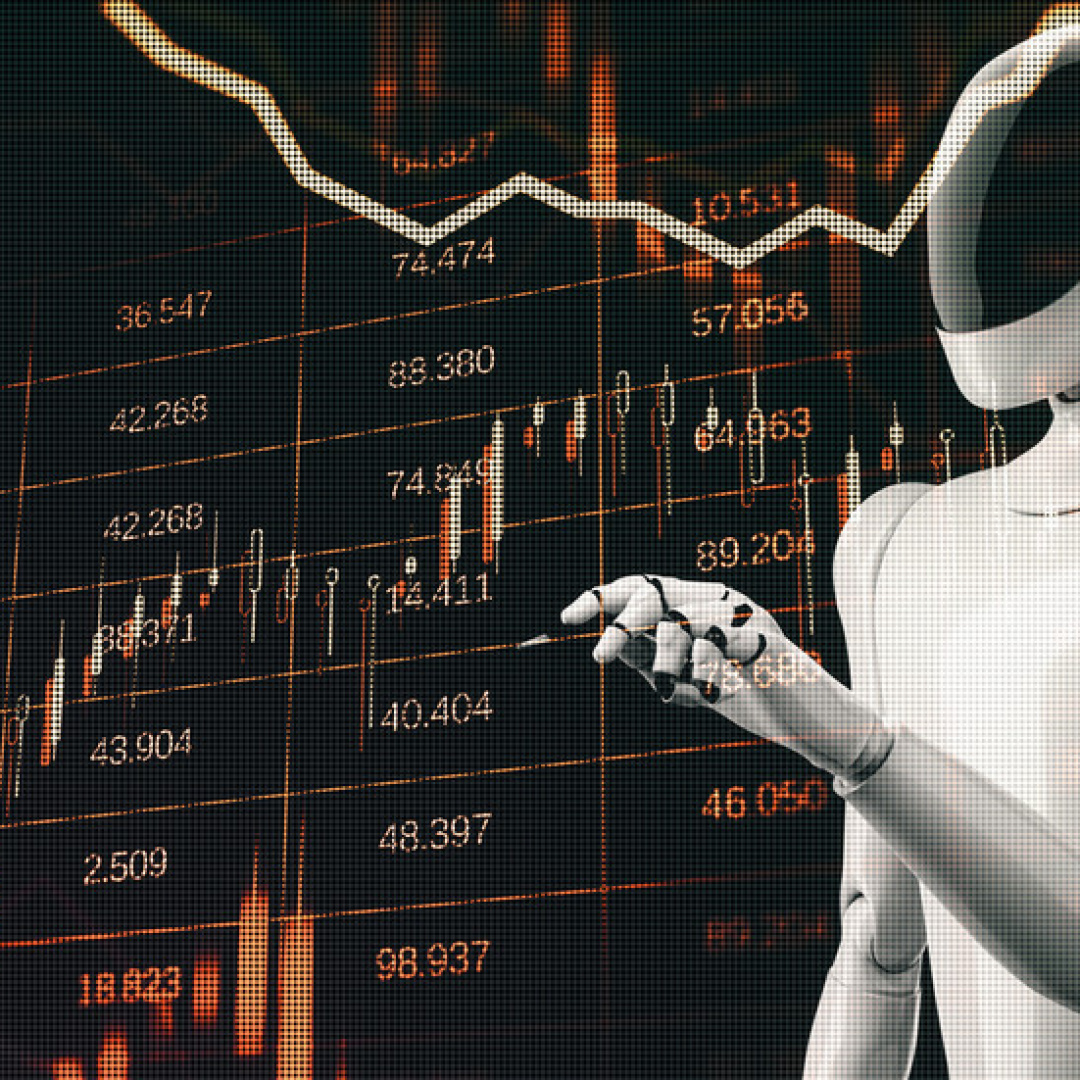
Startups Leverage AI for Enhanced Market Predictions

Several startups are increasingly betting on artificial intelligence (AI) to enhance their forecasting capabilities, aiming to outperform even the most specialized experts in various fields, including stock market movements. Dan Schwarz, cofounder of the forecasting company FutureSearch, predicts that by 2030, traditional decision-making methods will seem outdated. AI forecasting models have already demonstrated capabilities on par with elite forecasters, known as "superforecasters," by utilizing extensive data from both public and private sources.
In a notable achievement, two AI models recently secured the top positions in the Metaculus Cup, a competition that pits human and nonhuman prediction champions against each other. FutureSearch's superforecaster, Tom Liptay, acknowledges the competitive edge AI brings, recognizing that its advancements may soon surpass human capabilities.
For Your Trading Desk
Sponsor Spike Success.
Theo Summer, cofounder of Preseen, has successfully utilized AI tools to transform an initial investment of $35 into $1.9 million within just seven months on the prediction-making platform Kalshi. The primary goal of these AI systems is not to guarantee outcomes but to assess the probabilities of various events, allowing for cross-examination of interconnected factors, such as fluctuations in oil prices and geopolitical tensions.
Hedge Funds Lead the Charge in AI-Driven Market Predictions
Currently, hedge funds are among the quickest adopters of AI forecasting, leveraging its potential for rapid financial gains. Toby Shevlane, cofounder of Mantic, notes that AI's influence on trading decisions is already evident, with customers reporting its impact on their strategies. The emergence of AI in prediction markets like Kalshi and Polymarket is reshaping the landscape, raising concerns for retail investors who may struggle to compete as these platforms become increasingly dominated by AI systems.
The Expanding Influence of AI Across Multiple Sectors
The most advanced AI models are evolving beyond mere event prediction; they can now formulate their own inquiries about future scenarios and assign probabilities to various outcomes. This capability is extending into sectors beyond finance, with applications in government policy, corporate strategy, scientific research, and insurance risk assessments. Mantic, for instance, provides large corporations with potential regulatory scenarios, while also collaborating with government entities.
Despite the promising advancements, there are concerns regarding the accessibility of these tools. Summer expresses a mix of optimism and caution, noting the potential for misuse by nations with advanced AI systems. The implications of widespread AI adoption in forecasting are profound, as they could reshape decision-making processes across multiple domains, including finance and healthcare.