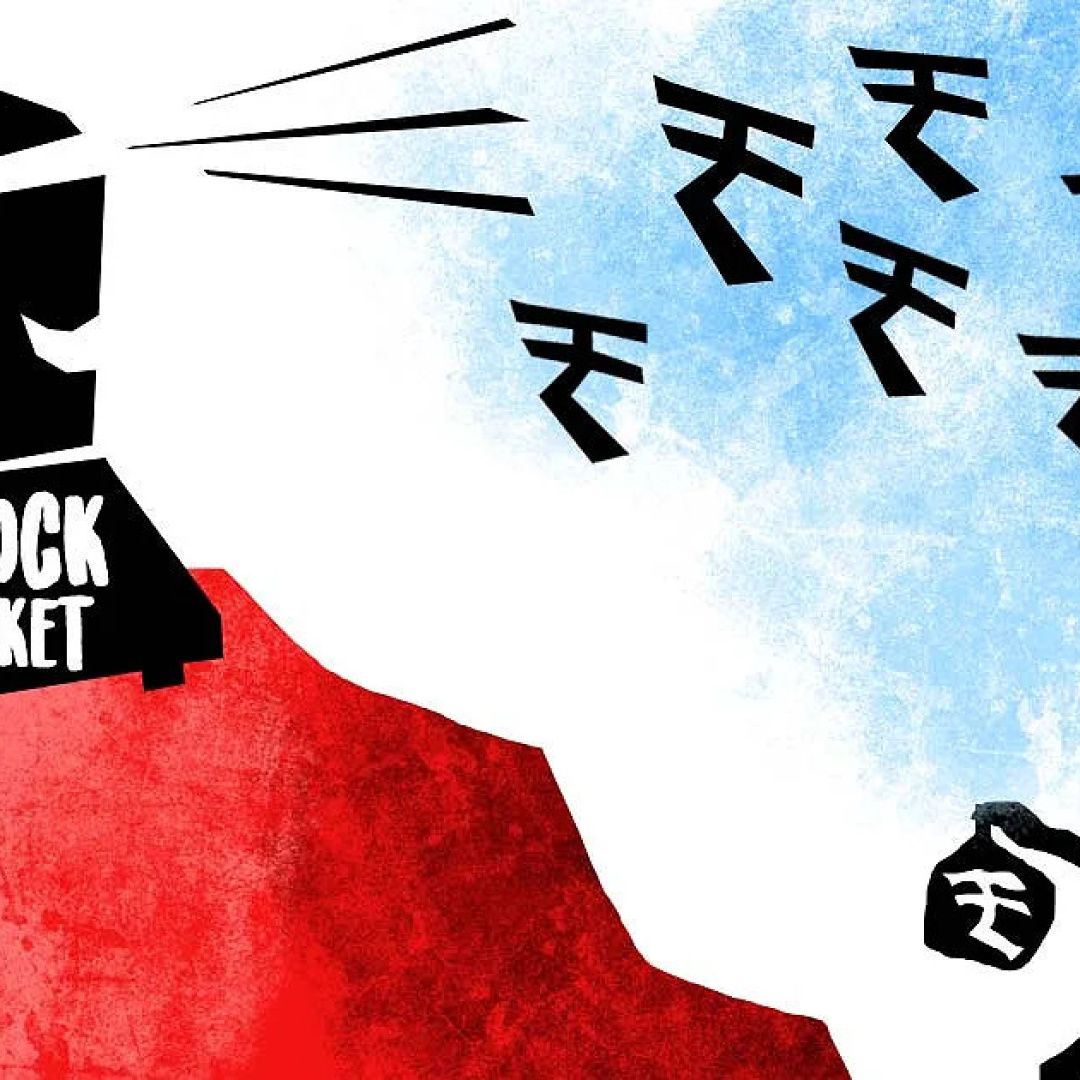
Indian Stock Market Plummets to Six-Month Low Amid Economic Turmoil

The Indian stock market faced a significant downturn on Monday, with the BSE Sensex plunging 1,124.02 points, or 1.52%, to close at 72,771.72, marking its lowest level since March 30, 2026. The Nifty index also fell by 360.25 points, or 1.56%, finishing at 22,780.25, its lowest point in nearly six months. This sell-off has been attributed to a combination of global economic turmoil and geopolitical uncertainty, which have heavily impacted investor sentiment.
The decline on Monday alone resulted in an erosion of Rs 7.52 lakh crore in investor wealth. Among the 30 constituents of the Sensex, 29 stocks ended lower, with Larsen & Toubro experiencing the largest drop at 2.81%. Other notable declines included Power Grid, Adani Ports, HDFC Bank, Hindustan Unilever, and Reliance Industries. The only stock to finish higher was Infosys.
For Your Trading Desk
Sponsor Spike Success.
The downturn was not limited to the frontline indices; the BSE SmallCap Select index fell by 1.90%, while the MidCap Select index declined by 1.39%. Every sectoral index on the BSE recorded losses, with the PSU Bank index suffering the steepest fall at 3.25%. The overall market sentiment has been affected by rising crude oil prices, geopolitical tensions, and weak global market cues.
Since August 27, the BSE Sensex has fallen by 4,161.87 points, or 5.40%, while the Nifty has declined by 1,310.6 points, a drop of 5.44%. This decline has wiped out a total of Rs 17.17 lakh crore in investor wealth, bringing the total market capitalization down to approximately Rs 4.74 lakh crore, equivalent to around $4.94 trillion.
Factors Driving the Indian Market's Decline Amid Global Tensions
Analysts have pointed to several factors contributing to the market's decline, including a sharp rise in crude oil prices due to ongoing geopolitical tensions, particularly the US-Iran conflict. Persistent foreign fund selling and elevated US bond yields have further exacerbated the situation, leading to declines across various sectors, including financials, metals, FMCG, oil and gas, and automobiles.
Market Outlook Remains Cautious as Oil Prices Surge
Vinod Nair, Head of Research at Geojit Investments, noted that the market has breached a critical psychological support level, reflecting growing investor caution amid deteriorating global macro conditions. The rejection of a ceasefire proposal by the US has heightened concerns about prolonged tensions in West Asia, which could lead to supply-side disruptions and increased commodity prices.
As Brent crude oil prices rose nearly 4% to $108.3 per barrel, the market outlook remains cautious. Analysts suggest that the 22,400–22,600 zone may serve as a critical support level, while the 23,000–23,100 range could act as an immediate hurdle. With volatility increasing, stock-specific opportunities may arise, but the overall sentiment is likely to remain subdued in the near to medium term.