S&P 500 Index Funds Show Increased Tech Concentration, Analysts Warn

Recent analysis indicates that more than half of the S&P 500 index's value is now concentrated in technology-related stocks, creating a level of exposure to artificial intelligence that surpasses even the dot-com era. This trend raises concerns about systemic risk for passive investors who may not fully realize the implications of such concentration.
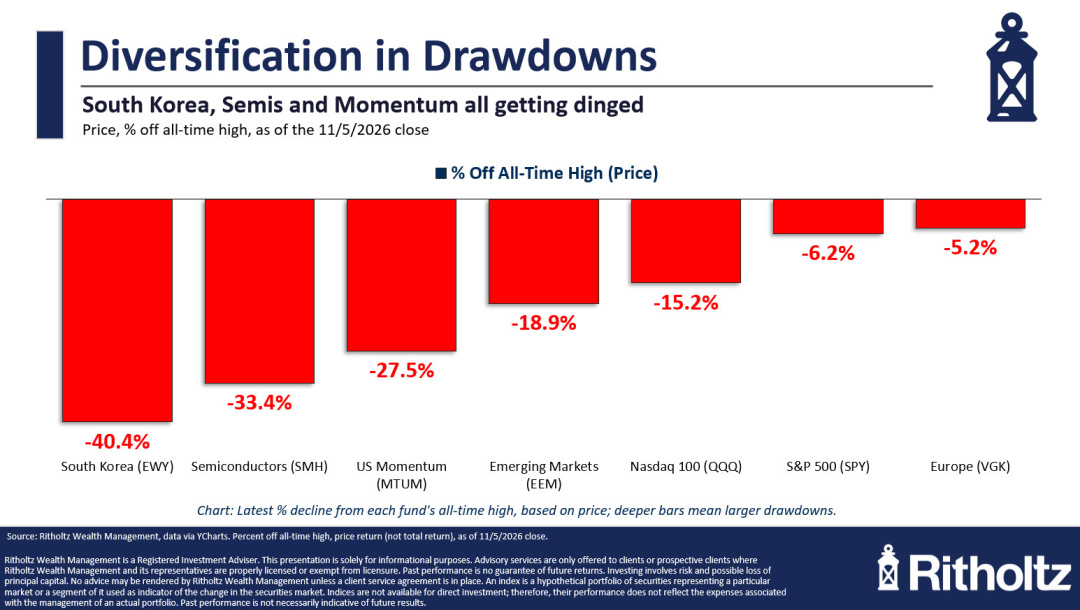
Historically, the advice for retail investors has been straightforward: invest in an S&P 500 index fund, hold it long-term, and rely on diversification to mitigate risks. However, the current landscape suggests that these supposedly diversified funds are increasingly resembling tech sector investments. Broader technology sectors, including communications services and tech-adjacent firms, now account for over 50% of the S&P 500's total market capitalization, which is approximately $70 trillion. The Information Technology sector alone constitutes about one-third of the index, largely driven by the surge in semiconductor and AI-linked companies during the ongoing AI boom.
For Your Trading Desk
Sponsor Spike Success.
The top ten companies within the S&P 500 now represent roughly 40% of the index's total market value. For context, during the peak of the dot-com bubble in 2000, this figure was around 27%. The mechanics of market-cap-weighted indexing contribute to this self-reinforcing cycle. As a stock's value increases, it occupies a larger share of the index, leading index funds to allocate more new money to that stock, further driving its price higher. The three largest S&P 500 ETFs—SPY, IVV, and VOO—collectively manage nearly $2.7 trillion in assets, meaning that every dollar flowing into these funds disproportionately benefits a small number of mega-cap tech stocks that dominate the index.
Navigating Concentration Risks in Household Wealth and Investment Strategies
The concentration risk extends beyond individual portfolios and into the broader fabric of American household wealth. The Federal Reserve recently reported that equities now account for nearly 47% of U.S. households' financial assets, an unprecedented share. Stocks also make up about 34% of total household assets, highlighting the potential impact of market fluctuations on everyday Americans.
In light of these developments, analysts are increasingly advising investors to consider diversifying their portfolios beyond the prevailing AI trade. This does not necessarily mean abandoning index funds altogether; rather, it may involve supplementing S&P 500 exposure with equal-weight index funds, international equities, or sector-specific allocations that lessen reliance on a narrow set of mega-cap tech stocks. Equal-weight versions of the S&P 500 allocate the same portfolio weight to each of the 500 companies, regardless of market capitalization. The performance disparity between cap-weighted and equal-weight S&P 500 funds has become a useful indicator of how much the largest companies are driving overall returns, and this gap has widened significantly in recent times.