NVIDIA vs. Eli Lilly: A Decade-Long Stock Comparison
NVIDIA and Eli Lilly have both reported remarkable earnings this quarter, but choosing the better stock for the next decade involves evaluating two distinct growth strategies with varying levels of risk.
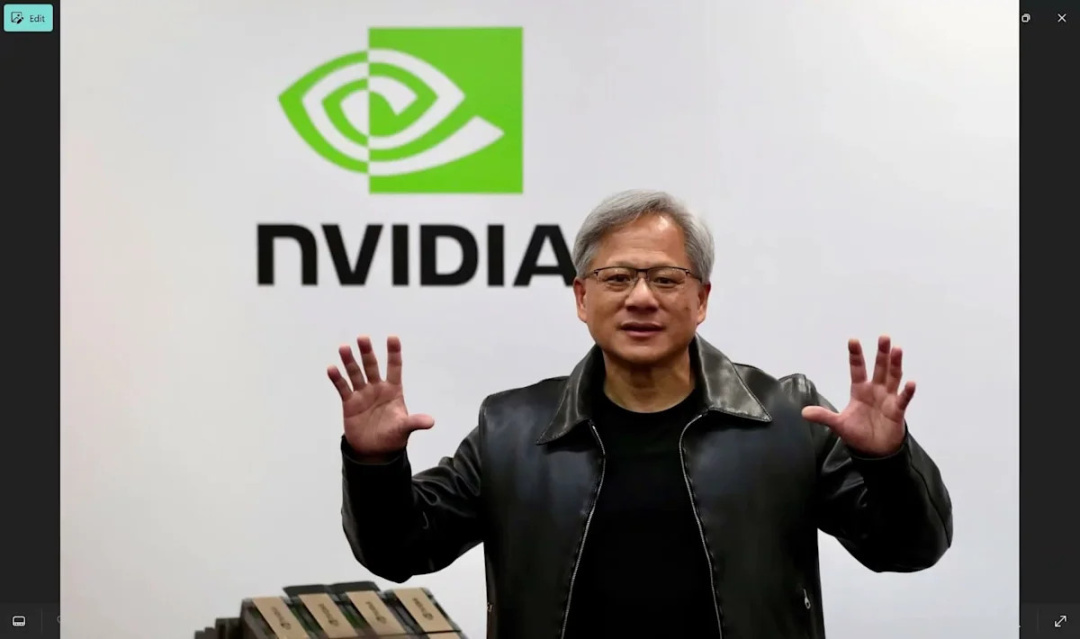
NVIDIA, known for its dominance in AI infrastructure, reported a staggering $96.22 billion in revenue for Q2 FY2027, marking a 105.8% increase year-over-year. The Data Center segment alone contributed $89.02 billion to this total. CEO Jensen Huang emphasized the significance of this moment, stating that AI has reached an inflection point where it is now generating productive and profitable work. The company anticipates Q3 revenue to reach $108 billion, with a projected 70% growth in fiscal 2028, despite facing supply constraints.
For Your Trading Desk
Sponsor Spike Success.
In contrast, Eli Lilly posted $22.97 billion in revenue for Q2 2026, reflecting a 47.7% increase. The company’s GLP-1 medications, particularly Mounjaro and Zepbound, accounted for $14.9 billion of this revenue. Eli Lilly is experiencing significant international growth, with its rest-of-world sales increasing by 136% in constant currency and a notable 93% rise in Mounjaro sales in China. The company has expanded its U.S. prescriber base for its oral GLP-1 Foundeo from 8,000 to 36,000 in just one quarter, leading to an upward revision of its full-year revenue guidance to between $85 billion and $87 billion.
NVIDIA is capitalizing on a robust platform, with each gigawatt of its Vera Rubin technology representing a $40 billion revenue opportunity, up from Blackwell’s $25 billion. The projected capital expenditure for hyperscalers is expected to reach nearly $800 billion in 2026 and $1.3 trillion in 2027. However, the company faces significant risks, including extreme memory pricing, $279 billion in supply commitments, and increasing scrutiny regarding its balance sheet support for AI labs.
Eli Lilly, on the other hand, is monetizing a promising pipeline of molecules. Its next-generation weight-loss drug, Retatrutide, has shown promising results, with weight loss approaching levels seen in bariatric surgery. The company has over 40 active phase three programs underway. Nonetheless, it has faced challenges, such as a 9% decrease in U.S. prices excluding rebates and a reliance on just two drugs, which poses a vulnerability.
NVIDIA's Growth Prospects vs. Eli Lilly's Challenges
Investors should keep an eye on NVIDIA’s Vera Rubin ramp, which is expected to contribute about 20% of data center revenue in Q3. If supply constraints ease without a drop in demand, the fiscal year 2028 earnings per share estimate of $15.5675 could be conservative. For Eli Lilly, the confirmation of Retatrutide’s regulatory path and the successful international launches of Foundeo will be crucial for maintaining market share.
When viewed through a ten-year lens, NVIDIA appears to have the stronger outlook. With a forward price-to-earnings ratio of 23 against triple-digit growth and a 60.4% operating margin, its growth potential is compelling. The platform's versatility across networking, CPUs, robotics, and sovereign AI continues to expand.
Eli Lilly represents a solid business with lower volatility and a dividend, making it a better fit for defensive growth strategies. Both companies present attractive investment opportunities, but in terms of relative positioning, NVIDIA’s AI-driven growth strategy seems to be better positioned than Eli Lilly’s pharmaceutical approach, at least until supply and demand dynamics stabilize.
Evaluating Long-Term Growth Potential
As both companies continue to navigate their respective markets, investors will need to weigh the potential risks and rewards associated with each stock. NVIDIA's aggressive growth in AI infrastructure contrasts with Eli Lilly's steady expansion in the pharmaceutical sector, making the decision between the two a complex one for long-term investors.
Ultimately, the choice may come down to individual investment strategies and risk tolerance. NVIDIA's rapid growth trajectory may appeal to those seeking high returns, while Eli Lilly's stability and dividend yield may attract more conservative investors. The future of both stocks will depend on their ability to adapt to changing market conditions and capitalize on emerging opportunities.