Wall Street Ends Mixed Week as Bond Yields Climb and Oil Prices Fluctuate

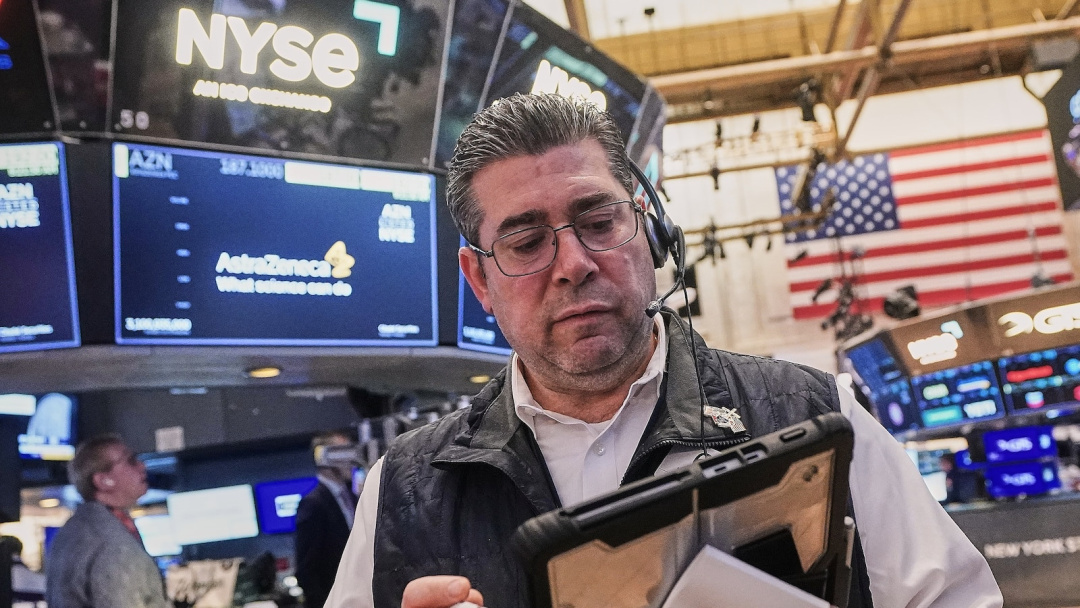
Wall Street concluded a volatile week on Friday with mixed results for U.S. stock indexes, as rising bond yields and fluctuating oil prices exerted pressure on the market. The S&P 500 managed to inch up by 0.2% after experiencing a day filled with modest gains and losses. However, this marked the index's second consecutive weekly loss.
The Dow Jones Industrial Average fell by 0.2%, while the Nasdaq composite saw a modest increase of 0.4%. Overall, the majority of stocks on Wall Street declined, largely due to increasing pressure from the bond market. The yield on the 10-year Treasury rose to 5% from 4.94% late Thursday, having briefly surpassed the 5% mark earlier in the week for the first time since 2023.
For Your Trading Desk
Sponsor Spike Success.
Higher yields can slow economic growth by increasing borrowing costs for various sectors, including the U.S. government, homebuyers, and businesses looking to invest. This trend tends to negatively impact stock prices and other investments. The rise in yields has been a gradual process since the COVID pandemic, which had driven them close to zero in 2020. Recently, the ascent has accelerated due to persistently high inflation.
Inflation remains above 3% by several measures, exacerbated by rising oil prices linked to geopolitical tensions, particularly the ongoing conflict with Iran. The price of Brent crude oil reached nearly $110 earlier in the week, up from just over $70 in July, and has been fluctuating since. It briefly dipped below $102 in overnight trading before recovering to settle at $103.87, down 0.9% from the previous day.
The increase in oil prices has led to higher gasoline costs, which now average $4.47 per gallon, compared to $3.20 a year ago, according to AAA. This surge is tightening household budgets, while diesel prices have reached a record $6.45 per gallon, directly impacting shipping costs for essential goods.
High inflation is raising expenses across the board, prompting companies to disclose their financial challenges. Steel manufacturer Nucor announced on Thursday that it anticipates a profit increase from its steel mills in the third quarter, driven by higher prices. However, it also faces rising costs, leading to a profit forecast that fell short of analysts' expectations, resulting in a 6.3% drop in its stock.
Market Reactions to Key Corporate Announcements and Stock Movements
In other notable market movements, Berkshire Hathaway saw a slight increase of 0.1% after Warren Buffett announced his retirement as chairman, having previously stepped down as CEO. Conversely, General Motors and Qualcomm experienced declines of 5.1% and 5.8%, respectively.
On a positive note, Coinbase Global surged by 11.7%, marking the largest gain among S&P 500 stocks, while Robinhood Markets rose by 9.1%. Overall, the S&P 500 increased by 12.74 points to close at 7,650.50, while the Dow fell by 95.40 points to 51,682.64, and the Nasdaq gained 104.25 points to finish at 26,552.55.
Internationally, European indexes faced declines, with the CAC 40 in Paris and London's FTSE 100 both dropping by 1.5%. In contrast, Asian markets performed better, with South Korea's Kospi rising by 2.7% and Japan's Nikkei increasing by 1.4%.
Central Banks Adjust Rates Amid Inflation Concerns
The Bank of Japan raised its benchmark interest rate to its highest level in 31 years, following the Federal Reserve's decision to increase its federal funds rate earlier in the week for the first time in three years, aiming to combat high inflation. Angelo Kourkafas, a senior global strategist at Edward Jones, noted that with consumer spending remaining strong and the labor market solid, the Fed had limited reasons to maintain its previous stance after years of above-target inflation.
The Fed's actions could exert further upward pressure on Treasury yields, especially as officials hinted at the possibility of another rate hike later this year. However, these measures also aim to restore confidence that the Fed will take necessary steps to bring inflation back to its 2% target, even if it may cause short-term economic pain.