Dow Jones Declines as Oil Prices Fall and Bond Yields Rise
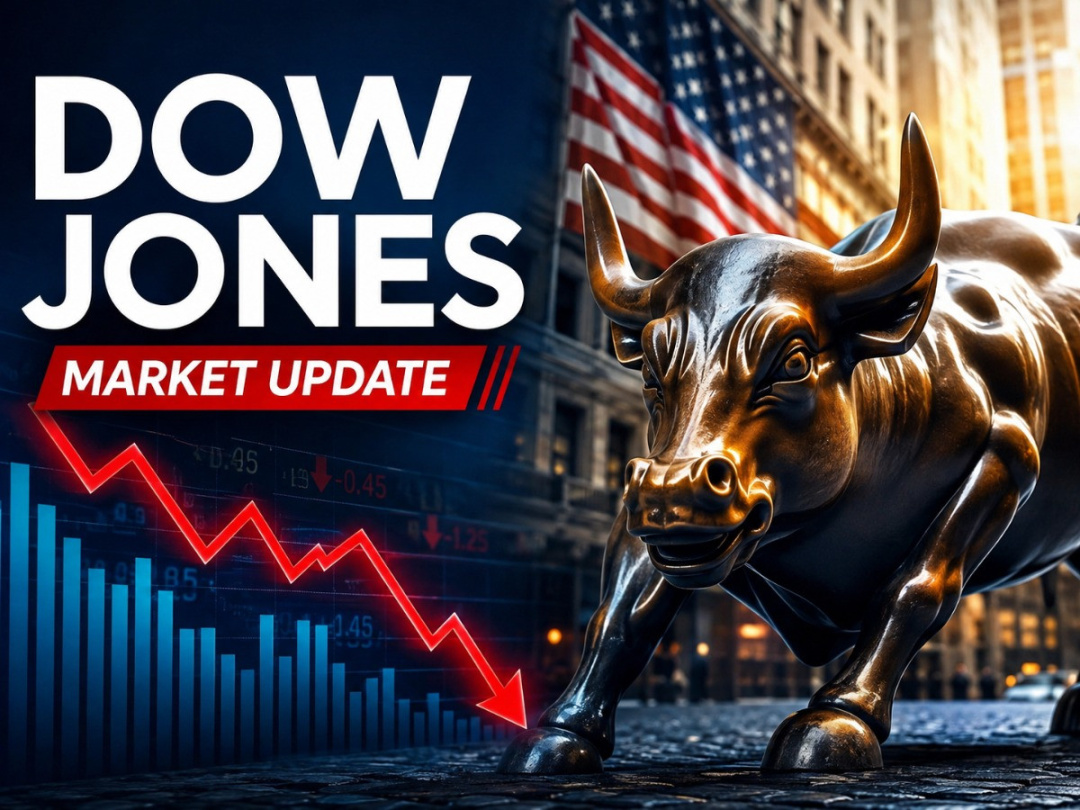
On September 18, US stocks traded lower, with the Dow Jones Industrial Average under pressure as investors reacted to rising Treasury yields and the Federal Reserve's recent interest rate decision. The Dow was reported at 51,564.58, down 213.46 points or 0.41%. Meanwhile, the Nasdaq Composite index remained nearly unchanged at 26,418.94, and the S&P 500 index fell by 10.07 points or 0.13% to 7,627.69. This market movement follows the Fed's unanimous decision to raise the target range by 25 basis points, indicating solid economic activity but persistent inflation concerns.
European markets showed weakness, while major Asian benchmarks were mostly higher. The Dow's decline was notable, with companies like Caterpillar, Walmart, McDonald's, Amazon, and Nvidia showing gains, while IBM, Disney, Travelers, Apple, and Sherwin-Williams faced losses. The Fed's recent rate hike raised the policy rate to a range of 3.75%-4%, despite acknowledging strong economic performance. Investors are now focused on the implications of inflation remaining above the Fed's 2% target and the impact of rising energy prices due to geopolitical tensions.
For Your Trading Desk
Sponsor Spike Success.
Nvidia continues to be a significant player in the technology sector, with its market capitalization exceeding $5.3 trillion and stock prices at $219.26. Investors are closely monitoring Nvidia's earnings to determine if its substantial investments in AI infrastructure can be maintained. Other AI-related companies, such as Lam Research and Applied Materials, have also seen stock price increases.
Oil prices have been on a downward trend for three consecutive days, with Brent crude dropping approximately 0.75% to $104 per barrel and WTI falling by about 0.69% to $101.20 per barrel. This decline is attributed to expectations that Saudi Arabia may regain some of its export capabilities. Lower oil prices could alleviate some inflationary pressures for Wall Street, although a renewed supply shock could reverse this trend.
The yield on the 10-year Treasury bond remains a critical factor for the stock market, approaching 5% as investors reassess the Fed's recent actions and inflation prospects. The yield reached approximately 4.98% during Friday's trading session, making bonds more attractive compared to stocks and increasing borrowing costs.
Netflix Faces Downgrade Amid Broader Market Declines
Netflix's stock was among the notable declines, trading at $71.92 after a drop of 4.50%. Wells Fargo downgraded its outlook for Netflix to "Underweight," citing concerns about engagement and content pipeline issues. The stock has fallen significantly this year, potentially marking its worst performance since 2022.
September has presented a mixed environment for Wall Street, with strong corporate investment in AI juxtaposed against rising inflation rates, oil prices, and Treasury yields. The Dow's fall below 51,600 reflects how larger stocks are responding to interest rate expectations.
In a significant leadership change, Warren Buffett announced he would step down as chairman of Berkshire Hathaway at age 96, after over five decades in the role. He will remain as chairman emeritus and continue on the board, with his son, Howard G. Buffett, succeeding him. This transition is noteworthy for investors, as Buffett's investment philosophy has long shaped Berkshire's corporate culture.
Market Outlook: Key Factors to Watch Following US-China Talks
Anticipation is building around the upcoming meeting between US President Donald Trump and Chinese President Xi Jinping, with discussions likely to cover artificial intelligence, trade, semiconductors, and currency issues. A Goldman Sachs survey indicated that a significant portion of investors expects Chinese stocks to rise following the meeting.
As the market opens, all three major US indices are starting below their previous levels. Investors should remain vigilant regarding key factors such as Treasury yields, inflation data, oil prices, Fed policy, corporate earnings, and US-China trade relations as they navigate the current market landscape.