Jim Cramer Calls Nokia a Strong Buy Amid Market Recovery
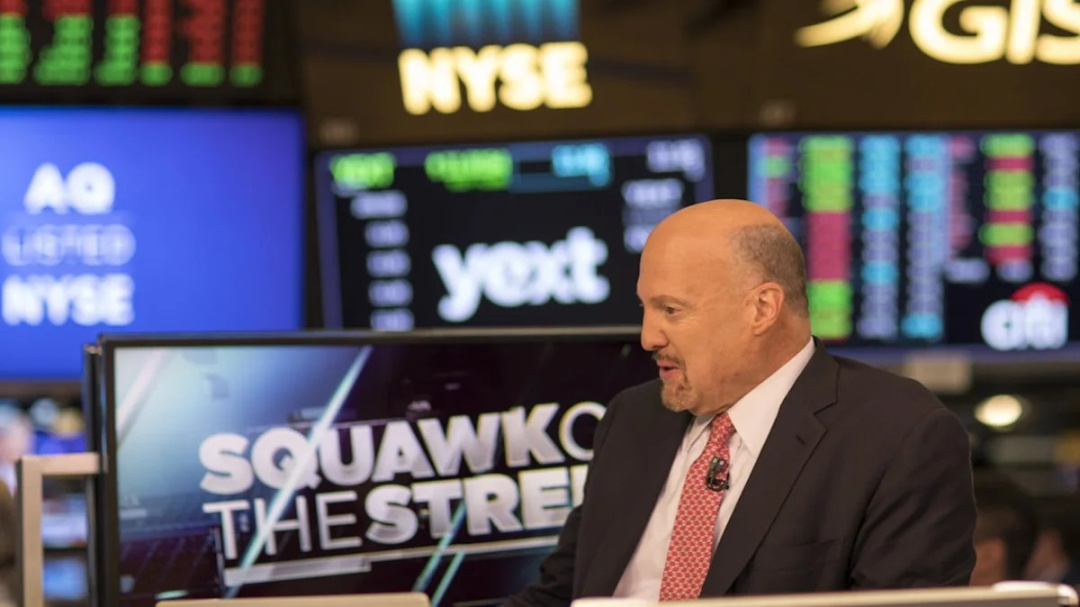
Jim Cramer has recently labeled Nokia a strong buy, a statement that could be seen as positive news for investors. However, this endorsement comes with a caveat that long-time Nokia shareholders are all too aware of: Cramer's track record has often led to skepticism among investors. During the September 16 Lightning Round of Mad Money, Cramer expressed his enthusiasm for Nokia, stating, "I like Nokia very much… I think it’s a terrific situation and I would be a buyer right here, right now." This endorsement followed Nokia's announcement of an expanded partnership with Microsoft, aimed at launching an AI-powered telecom network automation platform. Following this news, Nokia's shares experienced a 3.8% increase intraday on Thursday.
Despite the positive news, some investors may feel uneasy about the timing of Cramer's endorsement. A trend known as the "Inverse Cramer" strategy has emerged, where investors have found that betting against Cramer's recommendations has often yielded better returns. According to Quiver Quantitative, an Inverse Cramer portfolio has reportedly returned 171.6% over the past three years, outperforming other strategies. This has led to a humorous yet critical view of Cramer's recommendations among some investors.
For Your Trading Desk
Sponsor Spike Success.
Nokia's stock has seen a remarkable turnaround, moving away from its previous reputation as a value trap. Over the past year, the stock has surged by 132.81%, and it has risen 65.14% year to date, currently trading around $10.53 after reaching a 52-week high of $17.36. The company's market capitalization now stands at approximately $58.95 billion, reflecting a significant business transformation under CEO Justin Hotard, who has focused on capitalizing on what he describes as the AI supercycle.
The company's Q2 2026 report, released on July 23, provided further evidence of this turnaround. Nokia reported revenues of $5.49 billion, exceeding estimates by 13.79%, and earnings per share of $0.0799, surpassing the consensus of $0.0682. Notably, revenue from AI and Cloud customers more than doubled year over year, reaching $508.96 million, with order intake in this segment amounting to EUR 2.8 billion. Growth was also seen in Optical Networks and IP Networks, which grew by 19% and 15%, respectively, on a constant currency basis.
Nokia's Strategic Moves to Overcome Supply Challenges
Hotard highlighted supply constraints as a challenge, stating, "If there was more supply, I think we’d probably generate more revenue." To address this, Nokia is acquiring NXP’s semiconductor fabrication campus in Chandler, Arizona, and ramping up production capacity in San Jose and Pennsylvania.
Nokia's Mixed Financial Outlook and Future Prospects
Despite the positive indicators, Nokia's trailing P/E ratio stands at 70, with a forward P/E of 22 and a PEG ratio of 0.818. Analyst sentiment is mixed, with four strong buys, four buys, two holds, and one strong sell. The company's reported Q2 operating income reflected a loss of $57 million due to restructuring charges, and free cash flow was negative at $835 million, with net income dropping 94.44% year over year. Management anticipates EUR 800 million in restructuring charges in 2026 as it integrates its operations in China and simplifies its European footprint.
The recent partnership with Microsoft, which includes previous collaborations on networking and patent agreements, highlights Nokia's strategic direction. AI-RAN pilots are expected to commence by the end of the year, with commercial availability projected for 2027. For Q3, Nokia has guided for sequential net sales growth of 3% to 7%. Investors will be closely monitoring order conversion rates, as management expects about half of AI and Cloud orders to convert to revenue within twelve months. The outcome of this situation will determine whether Cramer's endorsement or the Inverse Cramer strategy proves to be the more astute investment approach.