Tokenized Stocks Transition to Mainstream Financial Infrastructure
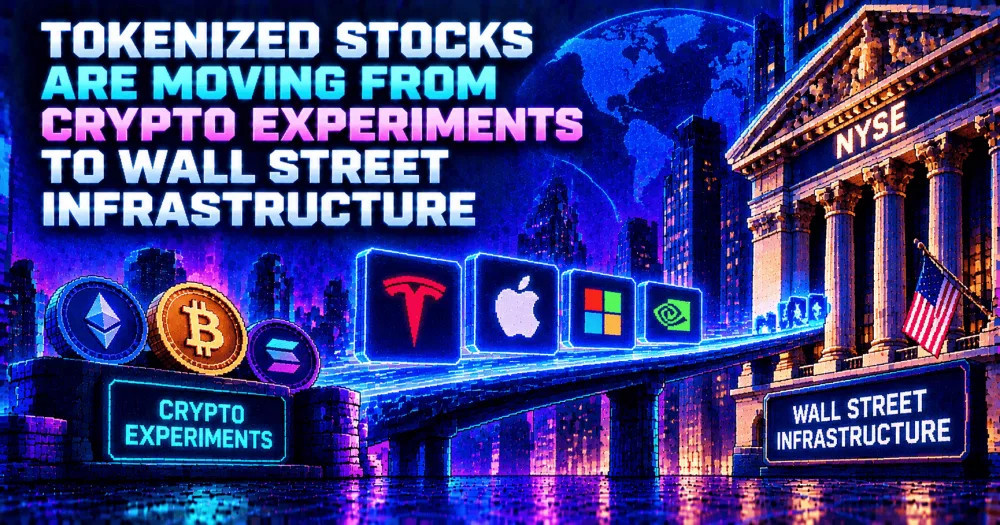
Tokenized stocks are transitioning from crypto experiments into mainstream financial infrastructure. Major financial institutions such as Nasdaq, DTCC, Robinhood, Kraken, and Ondos are recognizing tokenization as a significant market-structure initiative that could reshape equities trading, settlement, custody, collateral, and market access.
Historically, stock tokenization was primarily a crypto-native phenomenon, existing mainly on crypto platforms that provided price exposure to public companies. However, as of 2026, the landscape is changing dramatically, with established financial institutions developing critical infrastructure around tokenized securities.
For Your Trading Desk
Sponsor Spike Success.
The primary driver behind the adoption of tokenized equities is the operational value proposition they offer. Blockchain technology, with its programmability, portability, and on-chain settlement capabilities, has the potential to fundamentally alter the structure and settlement processes of securities. Crypto platforms have already demonstrated a strong investor appetite for on-chain equity exposure, and now Nasdaq and DTCC are leveraging their expertise in exchange, custody, clearing, and settlement to lend broader institutional credibility to stock tokenization.
Tokenized stocks are essentially crypto assets that represent shares or rights to shares. Some token structures are directly tied to real securities held by custodians, while others encode separate economic claims that reflect the underlying stock's economics. Typically, a provider encodes specific rights to a share into a token, which may be backed by underlying shares held with a custodian. Smart contracts govern transfers, redemptions, and compliance, enhancing the efficiency of these transactions.
Unlike traditional stocks, which are confined within broker, exchange, clearing, and custody ecosystems, tokenized equities can settle across compatible blockchains and digital wallets. While the underlying legal rights may be similar, the infrastructure supporting tokenized stocks is markedly different. This distinction is crucial as tokenized equities and synthetic stock tokens may appear similar on price charts, but they possess fundamentally different legal and economic structures.
Exploring the Transformative Impact of Tokenization on Market Operations
The potential for tokenization to reinvent market plumbing is significant. Key advantages include always-on trading, faster settlement, reduced post-trade costs, and greater collateral mobility. Each of these factors represents a major source of capital and operational expenditure for the industry. Blockchain technology allows for 24/7 trading, enabling tokenized equities to be traded beyond regular market hours, although liquidity may still be concentrated during U.S. trading hours.
Currently, U.S. equities settle on a T+1 cycle, but tokenized securities could facilitate much quicker settlement, allowing assets to shift almost immediately between approved participants. This capability could significantly reduce exposure and capital costs associated with trading.
Traditional securities markets are burdened by numerous databases that require reconciliation. Shared blockchain settlement can streamline post-trade processing, potentially leading to substantial savings for firms by alleviating the operational and capital expenditures involved in these processes. Additionally, tokenized equities can serve as valuable collateral within digital financial systems, allowing investors to pledge them as margin or collateral without leaving a blockchain environment.
Navigating the Challenges and Opportunities of Tokenized Stocks
As the market for tokenized assets grows, it is important to note that tokenization is not without its challenges. Investors should carefully assess the structure of tokenized stocks, including who controls the stock and what claims the token provides. Regulatory considerations also remain paramount, as existing securities laws apply to tokenized stocks, ensuring that investor protections are upheld.
The evolution of tokenized stocks represents a significant shift in how equities are accessed and traded. As traditional finance integrates blockchain technology, the potential for innovation and efficiency in capital markets is vast. Investors should remain informed about the developments in this space, as the landscape continues to evolve rapidly.