Tesla's Growth Potential Beyond Cars: Analyzing New Opportunities
Tesla is strategically positioning itself to capitalize on opportunities that extend beyond traditional car sales. The company is focusing on several key initiatives, including the expansion of its Robotaxi service, the development of its Optimus robot, and advancements in energy storage solutions. Analysts are questioning whether the market fully understands the magnitude of these combined opportunities.
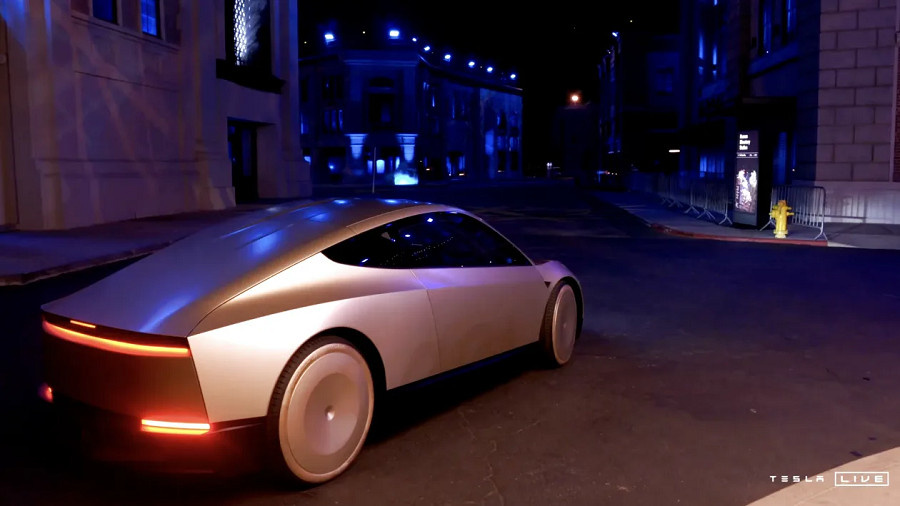
Currently, Tesla's stock (NASDAQ:TSLA) is trading at $365.44, with a price target set by 24/7 Wall St. at $389.34, suggesting a potential upside of 6.54% over the next year. The recommendation is to buy, with a confidence level of 90%. Despite a recent bounce of 3.21% in the past week and an 11.58% increase over the last month, the stock has experienced a decline of 18.74% year-to-date, sitting 22% below its 52-week high of $498.83. Factors such as a slow summer following the SpaceX IPO and a less-than-enthusiastic response to the Cybercab launch have contributed to this downturn.
For Your Trading Desk
Sponsor Spike Success.
In the second quarter of fiscal year 2026, Tesla reported record deliveries of 480,126 vehicles and revenue of $28.24 billion, reflecting a year-over-year increase of 25.5%. However, the company faced challenges with a non-GAAP earnings per share (EPS) of $0.33, which fell short of the $0.54 estimate. Capital expenditures more than doubled to $5.79 billion, and free cash flow turned negative at $1.09 billion. Despite these challenges, active Full Self-Driving (FSD) subscriptions reached 1.48 million, marking a 56% increase year-over-year, and the Robotaxi service is now operational in seven U.S. metropolitan areas.
The bullish outlook for Tesla suggests a potential price target of $465.56, indicating a 27.4% upside. The Robotaxi initiative has logged over 380,000 miles of unsupervised operation without any significant incidents, with CEO Elon Musk stating that the mileage is increasing by more than 10% each week. The Optimus robot, which Musk describes as the company's most significant product, aims for production of 1 million units annually for its third generation and 10 million for the fourth generation.
In terms of energy solutions, Tesla achieved 13.5 GWh in deployments during the second quarter, with the Megapack 3 set to launch in 2026. The introduction of the AI-5 chip and the TerraFab initiative are expected to enhance Tesla's in-house computing capabilities. However, with a trailing price-to-earnings (P/E) ratio of 380, the company has little room for error. Operating margins have compressed to 1.4%, and management has projected capital expenditures exceeding $25 billion for 2026. Prediction markets currently assign a mere 4% probability to the release of Optimus by the end of 2026 and a 19% chance for a California Robotaxi launch within the same timeframe.
Evaluating Tesla's Financial Resilience Amidst Market Challenges
Despite these hurdles, proponents argue that the margin compression is a strategic choice. In the first quarter of fiscal year 2026, Tesla demonstrated that its core business could generate $1.44 billion in positive free cash flow when investments stabilize, with a substantial cash reserve of $43.52 billion.
Comparatively, NVIDIA (NASDAQ:NVDA) serves as a benchmark for Tesla's ambitions in AI computing, trading at a P/E of 44 and boasting an operating margin of 60%. NVIDIA's revenue for the second quarter of fiscal year 2027 reached $96.22 billion, reflecting a staggering 105.85% year-over-year growth. Tesla, while pursuing AI computing, operates at a significantly smaller scale, trading at nearly nine times its earnings multiple.
Alphabet (NASDAQ:GOOGL), which owns Waymo, represents a direct competitor in the Robotaxi space. Alphabet's P/E ratio stands at 15, with Waymo achieving 500,000 fully autonomous rides weekly and maintaining 32% operating margins. In this context, the price target for Tesla appears reasonable, but the company must demonstrate its ability to earn that multiple.
Tesla's Growth Prospects: Balancing Risks and Opportunities
Investors should be aware that Tesla's core auto business has shown a 25% year-over-year growth in deliveries during the second quarter, while the potential for Robotaxi, Optimus, and energy solutions remains largely untapped at current stock levels. This situation may appeal to investors willing to accept a beta of 1.85 and seeking exposure to the evolving landscape of AI and autonomy. However, those requiring immediate positive free cash flow should note that capital expenditures are expected to rise before they eventually decline.
As Tesla continues to navigate its growth trajectory, significant fluctuations in stock performance could arise from the scaling of Robotaxi services, the timing of Optimus production, and the recovery of free cash flow.