Mapping the Regions Most Affected by the Great Depression
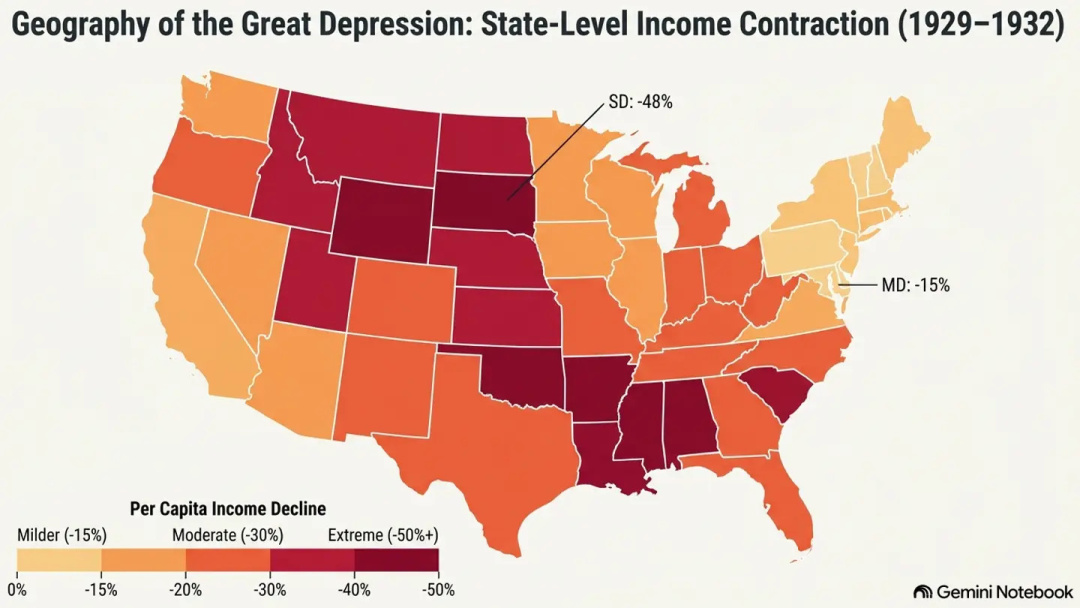
The Great Depression, which began with the stock market crash in 1929, marked a significant downturn in the U.S. economy, leading to widespread unemployment and financial instability. Banks closed, incomes plummeted, and many citizens lost their jobs and homes. The agricultural sector was particularly affected by the Dust Bowl, which devastated farmland and drove crop prices down, leading to numerous foreclosures. Families struggled to survive, often relying on community support and government relief programs.
The causes of the Great Depression were multifaceted. Following World War I, mass consumption left businesses vulnerable to shifts in consumer confidence. The speculative practices of the 1920s, such as buying stocks on margin, exacerbated the situation. When the market crashed, panic ensued as investors rushed to withdraw their funds, leading to a significant decrease in consumer spending and a series of banking failures.
For Your Trading Desk
Sponsor Spike Success.
The Federal Reserve, established to promote economic stability, inadvertently contributed to the crisis by contracting the money supply in an attempt to control the stock market. Additionally, the Gold Standard played a role; as investors exchanged dollars for gold, the Fed's response of raising interest rates led to further business closures and job losses.
The Smoot-Hawley Act of 1930, which raised tariffs on imports, also had negative repercussions. Other countries retaliated with their tariffs, reducing demand for American exports and worsening the economic situation.
Regional Variations in Recovery Efforts
The recovery from the Great Depression was slow and did not begin in earnest until the late 1930s, aided by increased government spending and the New Deal policies implemented by President Franklin D. Roosevelt. Notably, the impact of the Great Depression varied significantly across the country. According to the National Bureau of Economic Research, states like South Dakota faced the steepest declines in income and employment, while Maryland experienced less severe effects due to its more diversified economy.
Regions in the Dust Bowl, including Kansas, Oklahoma, Texas, New Mexico, Colorado, and Nebraska, suffered immensely as they dealt with both economic collapse and severe drought conditions. By the end of the Great Depression, approximately 200,000 individuals migrated from the Great Plains to California in search of better opportunities. In contrast, states in the South Atlantic, such as Maryland, fared better due to their industrial base and community resilience.
Economic Recovery and Regional Resilience
The path to recovery from the Great Depression was marked by significant changes in government policy and economic strategy. The New Deal introduced various programs aimed at job creation and economic stabilization, which played a crucial role in revitalizing the economy. The lessons learned from this period continue to inform economic policy today, highlighting the importance of government intervention during times of crisis.
Understanding the regional disparities in the impact of the Great Depression provides valuable insights into the economic vulnerabilities that can arise from both environmental and market factors. As we reflect on this historical event, it is essential to recognize the resilience of communities that adapted and survived through one of the most challenging periods in American history.