SpaceX Joins Nasdaq 100, Anticipating Billions in Passive Investment
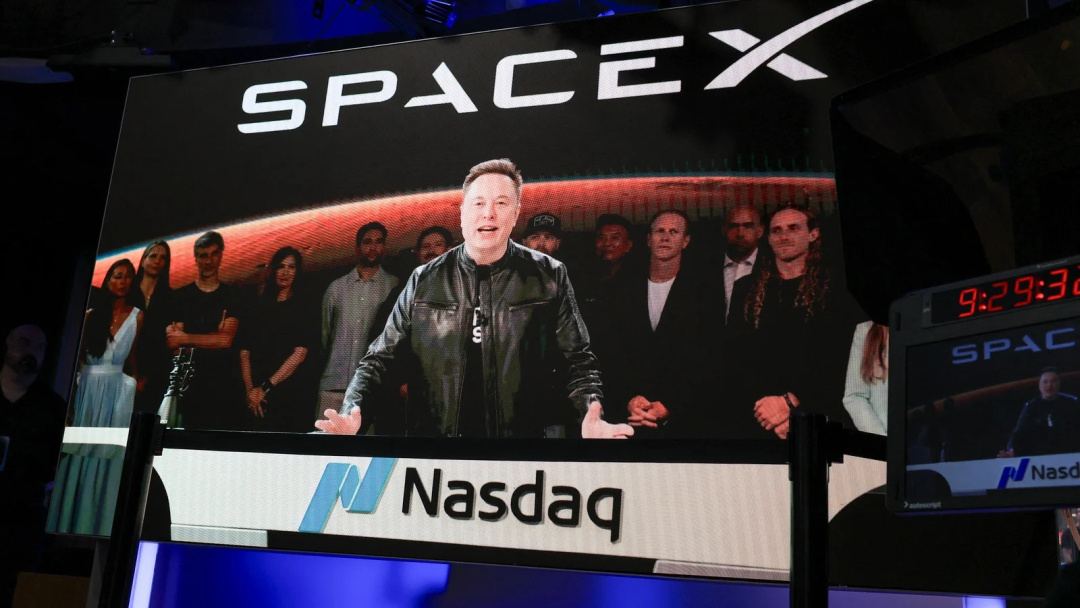
SpaceX has officially joined the Nasdaq 100, marking one of the fastest inclusions in the index's history, just 15 days after its stock market debut on June 12. This move is anticipated to trigger billions in passive buying as index funds and exchange-traded funds (ETFs) adjust their portfolios to include the $2 trillion-plus rocket and satellite company. With over $587 billion benchmarked in funds tracking the Nasdaq 100, including popular ETFs like Invesco's QQQ, the demand for SpaceX shares is expected to surge.
JP Morgan estimates that SpaceX's addition could attract around $4.3 billion in passive inflows. As the industry-mandated quiet period for analysts ends, major brokerages such as Morgan Stanley and Goldman Sachs have initiated coverage with top ratings, emphasizing SpaceX's potential across space, connectivity, and artificial intelligence (AI). Goldman analysts noted that each of these markets could evolve into multi-trillion-dollar opportunities over the next five years.
For Your Trading Desk
Sponsor Spike Success.
Other firms, including RBC, Bernstein, and Stifel, have also begun coverage, expressing optimism about the success of SpaceX's next-generation rocket, Starship, which they believe will drive the company's ambitions forward. Oppenheimer was the first to issue an 'outperform' rating earlier this month.
Investors are particularly interested in SpaceX's potential to become a major player in AI infrastructure, leveraging profits to develop its AI model, Grok, in competition with OpenAI's GPT models. Additionally, the company is expected to expand its Starlink satellite communications service.
Despite the optimism, not all analysts share the same bullish outlook. Morningstar has valued SpaceX at approximately $780 billion, citing uncertainties regarding its AI ventures and other business segments. Currently, SpaceX holds a market capitalization of $2.1 trillion, making it the sixth-largest company in the U.S., with CEO Elon Musk recognized as the world's first trillionaire.
While FTSE Russell has added SpaceX to its U.S. indexes, S&P Global has not yet established a fast-track process for the S&P 500, indicating that it may take at least a year before SpaceX is included in this widely tracked index. Since its IPO, SpaceX shares have experienced a more than 6% increase, reflecting the volatility typical of new stock market entrants.