BlackRock's Bitcoin ETF Shows Narrow Outperformance Over S&P 500
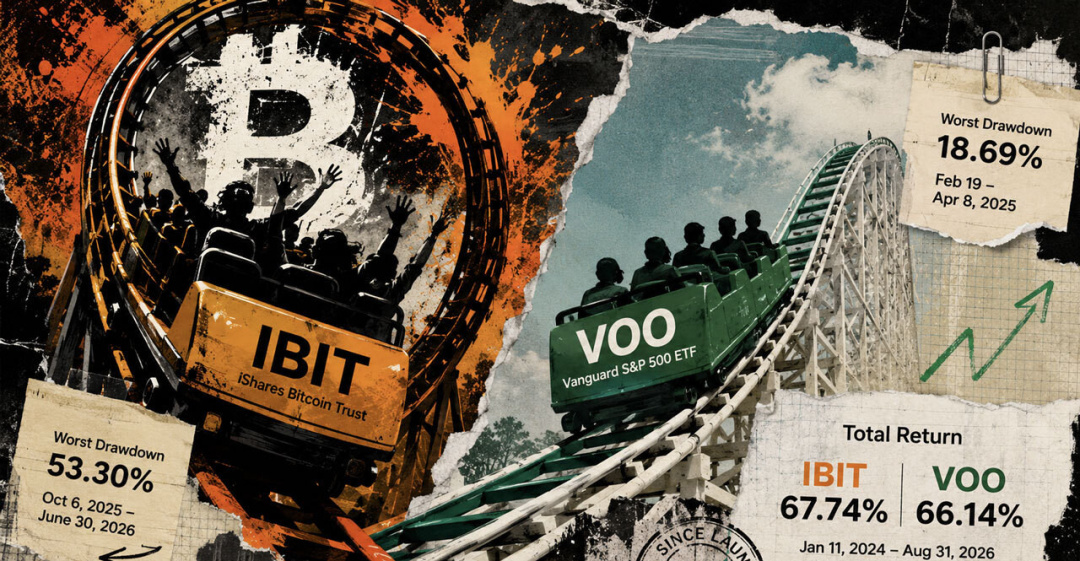
BlackRock's Bitcoin exchange-traded fund (ETF), known as the iShares Bitcoin Trust (IBIT), has managed to slightly outperform the S&P 500 since its inception, although it has subjected investors to a significant drawdown. From its debut on January 11, 2024, through August 31, IBIT recorded a return of 67.74%, compared to 66.14% for Vanguard's S&P 500 ETF (VOO). This left IBIT ahead by a narrow margin of just 1.60 percentage points.
The performance of IBIT is particularly noteworthy given the volatility of Bitcoin, which saw a peak-to-trough decline of 53.30% between October 6, 2025, and June 30, 2026. In contrast, VOO's maximum drawdown during the same period was significantly lower at 18.69%. Investors who purchased both funds at the time of IBIT's launch ended up with similar cumulative returns by the end of August, but those holding the Bitcoin ETF had to endure a much steeper decline from its peak.
For Your Trading Desk
Sponsor Spike Success.
Bitcoin's price trajectory has been a major factor in this performance gap. When U.S. spot ETFs launched in January 2024, Bitcoin was trading near $47,000. It surged to a record high of approximately $126,000 in 2025, following Donald Trump's election victory, before experiencing a decline to around $58,000 earlier this year. As of now, Bitcoin's price has rebounded to about $77,000, which has impacted the overall performance of IBIT.
Despite the volatility associated with Bitcoin, Wall Street continues to invest heavily in the infrastructure surrounding the asset. BlackRock has suggested that investors consider a 2% allocation to Bitcoin for diversification and potential long-term returns. This recommendation reflects the growing acceptance of cryptocurrencies in mainstream finance.
Comparing Fund Maturity and Asset Growth
The comparison between IBIT and VOO also highlights the different stages of maturity of the two funds. IBIT, now the largest spot Bitcoin ETF, manages approximately $60 billion in assets and has attracted around $63 billion in inflows since its launch. In contrast, VOO has crossed the $1 trillion mark in net assets, becoming the first ETF to reach this milestone in June 2026.
Market Dynamics and Investor Sentiment
The contrasting performance of these two funds illustrates the differing risk profiles associated with Bitcoin and traditional equities. While IBIT has outperformed VOO in terms of raw returns, the volatility and risk associated with Bitcoin investments cannot be overlooked. Investors must weigh the potential for higher returns against the significant risks involved in the cryptocurrency market.
As the landscape for Bitcoin and other cryptocurrencies continues to evolve, it will be crucial for investors to stay informed about market trends and the performance of these financial products. The ongoing development of Bitcoin ETFs and other cryptocurrency-related investment vehicles will likely shape the future of investment strategies in this space.