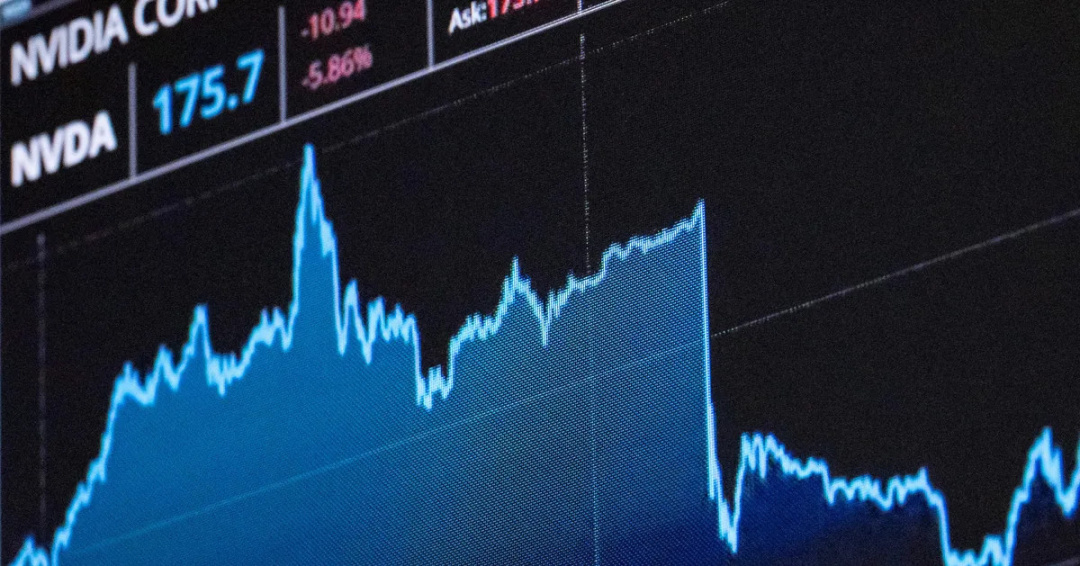
Nvidia Represents 8% of the S&P 500, Highlighting Market Concentration Risks

Nvidia has emerged as a significant player in the S&P 500, now representing about 8% of the entire benchmark index by weight. This concentration is unprecedented, with no single stock achieving such dominance in over five decades. To illustrate, one company out of 500 is responsible for roughly one-twelfth of the index’s total value, meaning that every dollar invested in an S&P 500 index fund allocates approximately 8 cents directly to Nvidia stock, regardless of investor intent.
As of mid-2026, Nvidia's market capitalization stands at approximately $5.3 trillion, fueled by soaring demand for its GPUs in artificial intelligence applications. The company surpassed Apple as the top holding in the index for the first time in 2024, a position it has maintained since.
For Your Trading Desk
Sponsor Spike Success.
The significance of Nvidia's weighting is underscored by its impact on the index's overall performance. In recent quarters, Nvidia has contributed between 17% and 22% of the S&P 500’s year-to-date gains. Thus, while it constitutes 8% of the index by weight, its influence on returns is nearly double that.
In technology-focused indices, the concentration is even more pronounced. Nvidia's weighting in the Nasdaq-100 has reached as high as 13.6%, reflecting its substantial influence on tech-oriented portfolios and exchange-traded funds (ETFs).
Market analysts have drawn historical comparisons to illustrate the scale of Nvidia's impact. For instance, AT&T once held about 12.7% of the market in 1922, while Standard Oil commanded around 9% in 1900. Although Nvidia's 8% does not reach those historical levels, the modern S&P 500 is a much larger and more diversified index than those of the past century.
The semiconductor sector has also expanded alongside Nvidia's growth, now accounting for approximately 17% to 19.7% of the S&P 500. A disappointing earnings report from Nvidia could have repercussions beyond its shareholders, potentially affecting the entire index. Analysts have observed that Nvidia's quarterly results often lead to increased volatility across the S&P 500, transforming what should be a company-specific event into a broader market issue.
This concentration risk presents both advantages and disadvantages. On one hand, Nvidia's strong performance has positively influenced the entire index, benefiting investors who hold standard S&P 500 funds without directly investing in AI technology. Conversely, the same dynamics that enhance gains can also amplify losses.
Equal-weight versions of the S&P 500 have diverged significantly from the traditional cap-weighted index due to this concentration. Some portfolio managers are advocating for capping mechanisms or diversification strategies to mitigate what they perceive as unintended single-stock risk within passive investment portfolios.