1994 Nasdaq Outage Caused by Squirrel Highlights Market Vulnerabilities
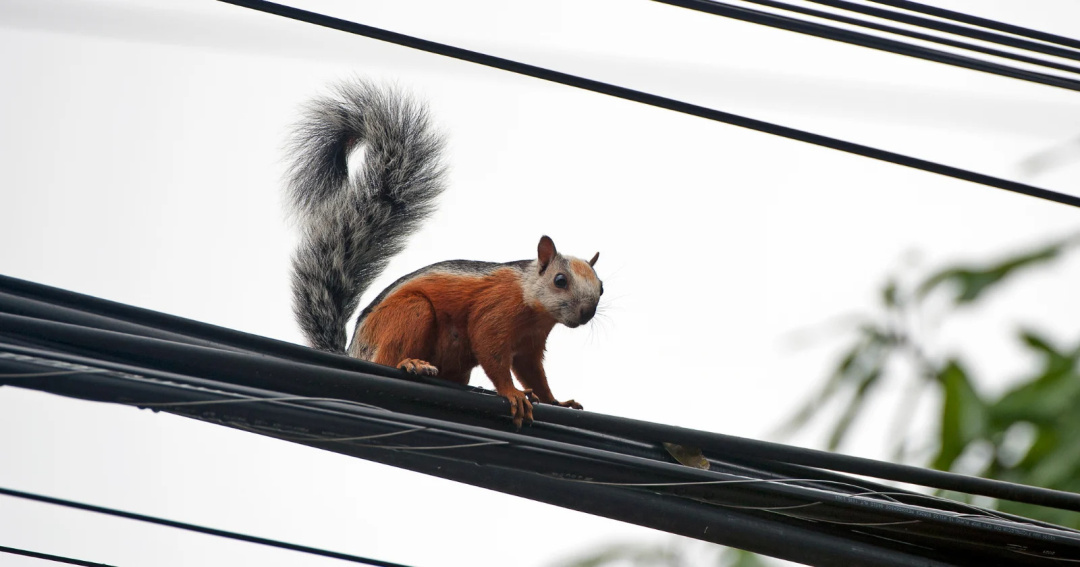
On August 2, 1994, a squirrel chewed through a power line in Trumbull, Connecticut, causing a significant disruption in trading on the Nasdaq for 34 minutes. This incident marked the second time in seven years that a squirrel had caused a blackout for the exchange, underscoring the vulnerabilities in the infrastructure of the world’s first electronic stock market. Founded in 1971, the Nasdaq operated without a traditional trading floor, relying entirely on computer systems to facilitate trades. By the 1990s, it was home to shares of major technology companies such as Microsoft, Intel, and Apple, all of which were traded as data signals.
The power outage occurred when the squirrel chewed through a line that supplied electricity to the Nasdaq's computer center in Trumbull, where all trades and quotes from across the country were processed. Although the facility was equipped with backup power systems designed to maintain operations until a secondary site in Rockville, Maryland could take over, the automatic switchover failed. As a result, thousands of brokers were left staring at inactive screens, with over 4,000 pending orders stuck in limbo.
For Your Trading Desk
Sponsor Spike Success.
This incident was particularly embarrassing for the Nasdaq, especially considering a similar event had occurred in December 1987, shortly after the infamous Black Monday crash. That earlier outage lasted 82 minutes and resulted in a significant number of shares being blocked from trading. Following the 1987 incident, the Nasdaq had promised to implement redundancy measures, which included the establishment of the Rockville backup site. However, the failure of the backup system during the 1994 outage revealed that the Nasdaq had not adequately addressed the risk of a single point of failure.
The 1994 outage was not an isolated incident; a construction mishap had previously caused a two-and-a-half-hour disruption that summer. These repeated failures drew the attention of Congress and the Securities and Exchange Commission, leading to a push for more robust infrastructure that would prevent such occurrences in the future.
Interestingly, squirrels are known to be a common cause of power outages in the United States, responsible for thousands of interruptions annually. Their behavior of gnawing on electrical equipment poses a significant risk to power reliability. As a result, utilities have implemented various protective measures, yet the risk remains.
Today, the Nasdaq has evolved to mitigate such vulnerabilities, operating with multiple data centers and diverse power sources. The lessons learned from the 1994 incident continue to serve as a reminder of the importance of infrastructure resilience in the face of seemingly trivial risks. The squirrel incident remains a notable example in discussions about engineering and market reliability, illustrating that even the most advanced electronic systems can be brought down by a simple act of nature.