South Korean Investors Face Losses Amid AI Stock Market Volatility
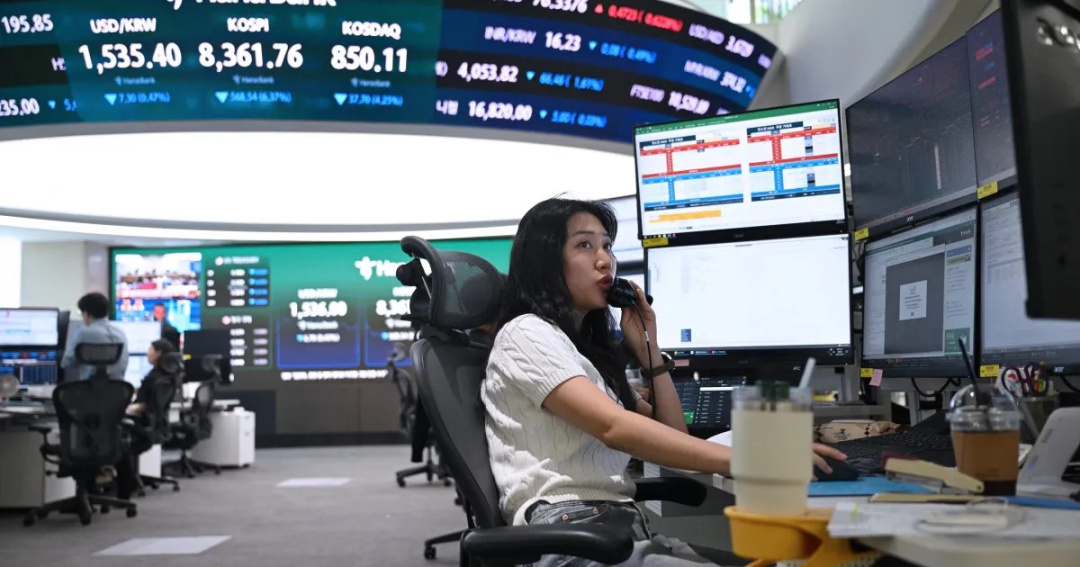
In South Korea, the stock market experienced a significant surge earlier this year, driven by a booming demand for AI-related chips. This surge attracted many novice investors, including Eun-bi, a civil servant in her thirties, who withdrew most of her savings to invest in shares, particularly in memory chipmaker SK Hynix and a U.S.-listed fund tracking the semiconductor industry. Her goal was to raise funds for her upcoming wedding in April next year. However, as the KOSPI index plummeted nearly 40 percent from its peak in June, Eun-bi's investments lost tens of thousands of dollars, jeopardizing her wedding plans.
Eun-bi's experience reflects a broader trend among millions of South Koreans who enthusiastically invested during what was touted as the biggest stock market rally in the country's history. Many first-time investors were encouraged by President Lee Jae Myung, who aimed to make the stock market more accessible to citizens. Despite some recovery since the market's downturn in July, the KOSPI remains highly volatile, with a nearly 6 percent drop recorded recently.
For Your Trading Desk
Sponsor Spike Success.
The KOSPI index, which had doubled in the first half of the year, reached an intraday peak of 9,385.59 on June 19, only to fall back below 5,595 points by the end of July. This volatility has raised questions about the government's role in promoting risky investment products, including leveraged exchange-traded funds (ETFs). Analysts argue that while government policies contributed to the situation, the concentration of the market in a few major companies, particularly Samsung Electronics and SK Hynix, has also played a significant role.
The introduction of leveraged ETFs tracking the daily movements of these companies has been criticized as a policy failure, with some investors feeling trapped by the risks associated with these products. President Lee's popularity has declined amid the market turmoil, with his approval rating dropping to 43 percent, the lowest of his presidency, according to a recent survey.
Experts suggest that the recent volatility in the KOSPI may influence future political dynamics in South Korea, as the government faces scrutiny over its handling of the stock market. While some analysts point to the inexperience of retail investors as a factor in their losses, others emphasize that many Korean investors are not new to leveraging their investments.
Eun-bi, despite her losses, does not hold the government responsible for her situation. She believes that the market will stabilize once the current volatility subsides. Her experience has led her to reconsider her investment strategy, emphasizing the importance of diversification in her future investments. She plans to monitor the market closely as she approaches her wedding date, aiming to convert her investments back into cash before the event.