Bitcoin's Decade: $10,000 Grows to $870,000 as Active Funds Struggle
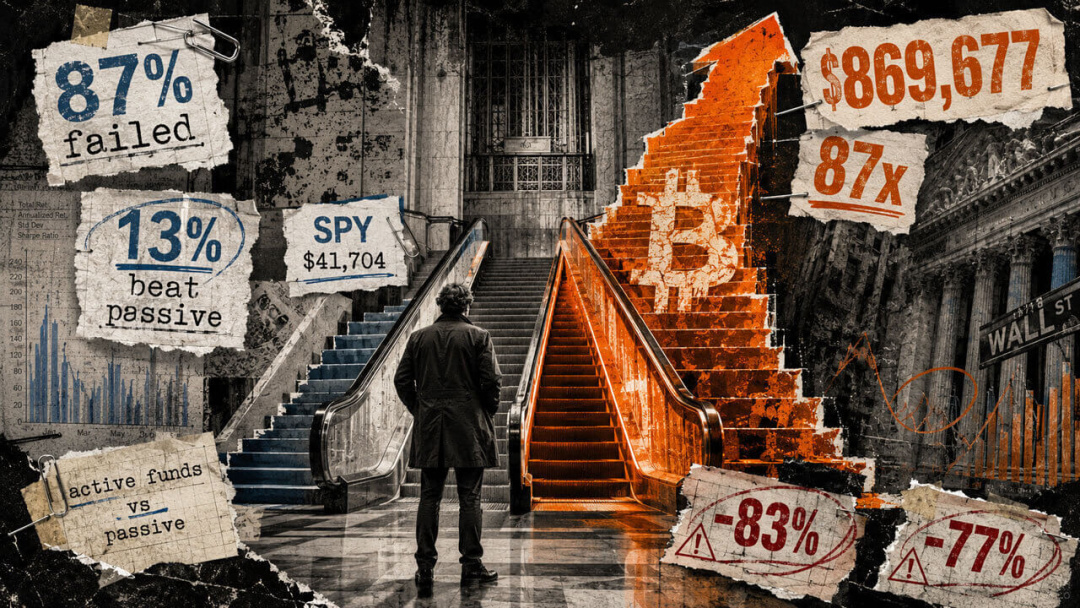
Bitcoin has demonstrated remarkable growth over the past decade, turning an initial investment of $10,000 into approximately $870,000. This performance is particularly notable when compared to actively managed US large-cap equity funds, where only 13% managed to outperform their passive benchmarks as of June 30, according to data from Morningstar reported by The Wall Street Journal.
As of June 30, 2016, Bitcoin was valued at $673.34, and by June 30, 2026, it had surged to $58,558.86. This translates to an impressive total return of about 8,597%, equating to an annualized growth rate of approximately 56.3%. In contrast, the SPY ETF, which tracks the S&P 500, reported a 10-year annualized total return of 15.35%, resulting in a $10,000 investment growing to about $41,704. Thus, Bitcoin's returns outpaced those of the SPY by a significant margin.
For Your Trading Desk
Sponsor Spike Success.
The landscape for active fund managers has been challenging, particularly as the concentration of the S&P 500's largest companies has reached levels not seen since the 1960s. This concentration means that even successful stock selections can lead to underperformance against the index if they do not include the dominant stocks driving returns.
Investors have been weighing the effectiveness of professional stock selection against the simplicity of a Bitcoin investment. While Bitcoin's volatility poses risks, those who held onto their investments through significant downturns—such as an 83% drop from its 2017 peak and a 77% drop from its 2021 peak—ultimately reaped substantial rewards.
As of June 2026, the total assets in active mutual funds and ETFs amounted to $18.8 trillion, while indexed funds held nearly $21.9 trillion, indicating a growing preference for passive investment strategies. The debate between active and passive management continues, with Bitcoin adding a new dimension to asset allocation discussions.
The future of active management may hinge on broader market participation beyond the largest companies, which could provide more opportunities for fund managers to capitalize on market dispersion. However, the risks associated with Bitcoin, including potential drawdowns, remain a critical consideration for investors.
Currently, Bitcoin is ranked #1 by market capitalization and has seen a slight increase of 1.25% in the past 24 hours.