Tesla Stock Rises, But Structural Issues Persist
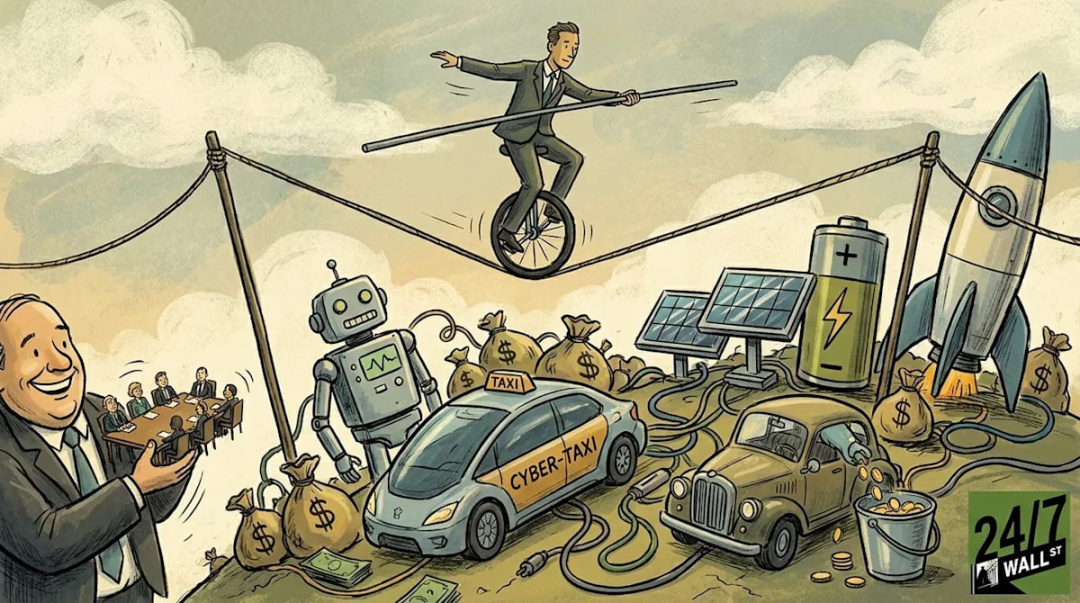
Tesla's stock, trading under the ticker TSLA, has experienced a modest recovery, rising over 4% this week. However, the stock is still down 24% year-to-date, reflecting ongoing concerns about the company's financial health. Currently, Tesla's shares are priced at approximately $345, which translates to a staggering trailing price-to-earnings ratio of around 306x. This recovery appears driven more by market sentiment than by improvements in the company's underlying fundamentals.
Despite achieving record deliveries of 480,000 units in the second quarter, Tesla's operating margin remains alarmingly low at just 1.4%. This margin is insufficient to support the company's ambitious growth strategies, which include significant investments in various projects. Elon Musk's substantial compensation package, valued at around $1 trillion, has contributed to a 47% increase in operating expenses, which now total approximately $4.35 billion. Musk's involvement in multiple companies, including SpaceX and Neuralink, raises questions about his focus on Tesla's core operations.
For Your Trading Desk
Sponsor Spike Success.
Analysts are cautious about Tesla's future, with a consensus price target of $396.62, indicating limited upside potential. Prediction markets suggest a target of $326.34, reflecting a potential downside of about 5.81%. The company is undertaking its largest capital program to date, with projected expenditures exceeding $25 billion for 2026, a significant increase from $8.5 billion last year. In the second quarter alone, capital expenditures reached $5.79 billion, a 141.81% increase, while free cash flow turned negative at $1.09 billion.
Despite record delivery numbers, the financial results have not met expectations. Adjusted earnings per share (EPS) came in at $0.33, falling short of the anticipated $0.51, and operating income dropped by nearly 57%. The decline in regulatory credit revenue to $146 million further complicates the financial landscape. Some analysts estimate that U.S. sales may have declined by at least 10% in the quarter following the removal of the EV tax credit.
While there are positive indicators, such as the successful rollout of the robotaxi service and increasing subscriptions for Full Self-Driving (FSD), these do not address the fundamental issues at play. The company must demonstrate that its ambitious projects can generate sufficient revenue to support ongoing expenditures without draining resources from its core automotive business.
Three key factors could potentially shift the current bearish outlook: a recovery in operating margins, a return to positive free cash flow while maintaining high capital expenditures, and improved governance structures, including an independent chair and a clear capital allocation framework. Until these issues are addressed, Tesla's stock may continue to face challenges despite its recent price recovery.