Guidelines for Checking Your Portfolio During Market Fluctuations
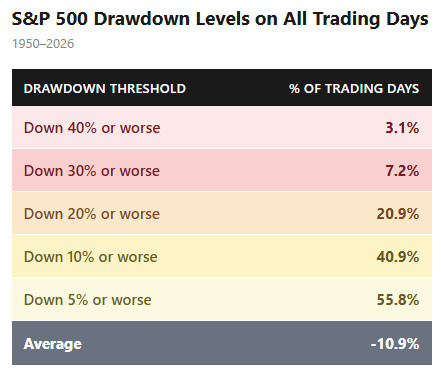
Recent discussions have highlighted the frequency with which investors should check their portfolio values, particularly in light of market fluctuations. Historical data reveals that the S&P 500 has achieved nearly 1,400 new all-time highs since 1950, accounting for only 7% of all trading days. This statistic underscores the reality that long-term investors will often experience periods of drawdown, with the market being down from its all-time highs approximately 93% of the time.
On average, investors have faced an 11% drawdown over the past 75 years, with more than 40% of trading days witnessing double-digit declines. Given this context, it is crucial for investors to approach portfolio management with a strategy that minimizes emotional distress. The author emphasizes that while drawdowns can be painful, patience is key, as new highs will eventually return.
For Your Trading Desk
Sponsor Spike Success.
To mitigate the psychological impact of market volatility, the author recommends specific guidelines for checking portfolio values. It is advised to avoid checking portfolio values during bear markets, as this can exacerbate feelings of distress. Instead, investors should consider reviewing their portfolio values only during bull markets. The author personally updates his investment account values biannually, opting to skip this during significant market downturns to maintain emotional stability.
Investors are also cautioned about the temptation to frequently check brokerage accounts, which can lead to impulsive trading decisions. The ease of access to account information in today's digital age can encourage daily checks, but this behavior does not enhance investment performance. Regular monitoring does not accelerate gains or improve risk-adjusted returns, and it often heightens emotional responses to market fluctuations.
In conclusion, the article provides a thoughtful perspective on portfolio management, emphasizing the importance of emotional resilience and strategic timing in monitoring investments. Investors are encouraged to adopt a disciplined approach to portfolio checks, particularly during volatile market conditions.