Fold Plans Reverse Split After Selling 832 BTC for Nasdaq Compliance
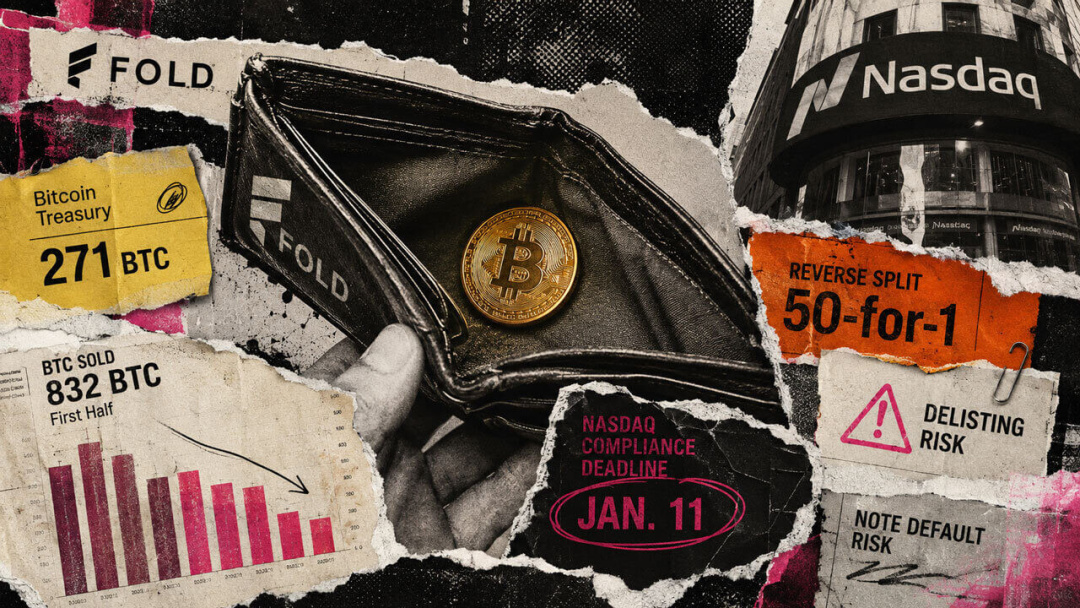
Fold, a Bitcoin financial services firm, is facing challenges related to its Nasdaq share price and is considering a reverse stock split as a potential solution. This comes after the company sold 832 BTC over the first half of the year to alleviate debt, leaving it with a reduced Bitcoin reserve. As of June 30, Fold reported holding 194 BTC valued at approximately $11.4 million in its investment treasury, alongside another 77 BTC worth $4.5 million in a rewards treasury, which is tied to customer liabilities.
The proposed reverse stock split could help elevate Fold's nominal share price without generating cash or issuing new shares, which is crucial for regaining compliance with Nasdaq's minimum bid price rule. However, this maneuver does not address the company's operational cash needs. Fold reported a $15.6 million operating loss for the first half of 2026, raising concerns about its financial sustainability without further stock sales or depleting its investment treasury.
For Your Trading Desk
Sponsor Spike Success.
In February, Fold sold 200 BTC for $14.4 million and later sold 632 BTC for $44.7 million in June, using part of the proceeds to repay a Bitcoin-backed credit facility. Despite these sales, the company has not clarified how it plans to meet future cash requirements. Nasdaq notified Fold on July 14 that its shares had closed below the $1 minimum for 30 consecutive business days, providing an initial cure period until January 11, 2027. To regain compliance, Fold must maintain its share price above $1 for at least 10 consecutive business days.
Fold is seeking shareholder approval for a reverse split ranging from 1-for-2 to 1-for-50, although no specific ratio has been selected yet. This action could potentially help the company meet Nasdaq's requirements without altering its cash position. However, the risk remains that failing to maintain its listing could trigger default on a $13 million investor note. Thus, while Fold may restore compliance through a reverse split or a stock price recovery, the question of how it will fund ongoing operations remains unresolved.