Nvidia and Apple: A Close Look at Their Earnings and Market Strategies
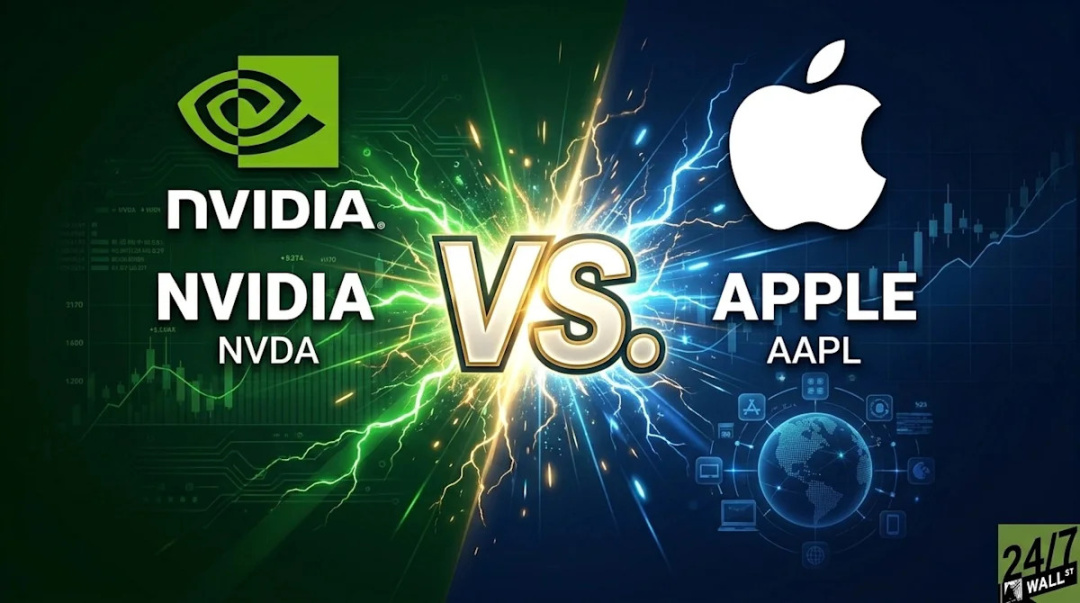
Nvidia and Apple recently released their earnings reports, revealing contrasting business strategies and financial performances. Nvidia reported a remarkable 85% increase in revenue, reaching $81.61 billion for the first quarter of fiscal year 2027, with a significant portion attributed to its data center segment, which generated $75.25 billion. The company's non-GAAP gross margin stood at an impressive 75%, and free cash flow was reported at $48.55 billion. CEO Jensen Huang emphasized the rapid expansion of AI infrastructure, indicating a strong demand for Nvidia's products in this sector.
In comparison, Apple achieved its strongest June quarter ever, with total revenue of $109.4 billion for the third quarter of fiscal year 2026. The iPhone segment alone contributed $54.252 billion, while the services division set a record with $30.7 billion in revenue. CEO Tim Cook noted double-digit growth across all major product categories and geographic regions, aided by a one-time tariff refund that positively impacted gross margins.
For Your Trading Desk
Sponsor Spike Success.
Despite their successes, both companies face challenges. Analysts have pointed to a potential "100-year flood" in memory pricing that could pressure Apple's gross margins in the upcoming quarter, projecting them to fall between 47% and 48%. On the other hand, Nvidia has $119 billion in commitments tied to TSMC, raising concerns about supply chain constraints.
Looking ahead, Nvidia has guided for $91 billion in revenue for the second quarter of fiscal year 2027, excluding any contributions from China’s data center compute. Market predictions suggest a high probability that Nvidia's data center revenue will exceed $80 billion, although the outlook for surpassing $90 billion remains uncertain.
In terms of valuation, Nvidia's price-to-earnings (P/E) ratio is currently at 34, reflecting its rapid revenue growth, while Apple's P/E stands at 36, appealing more to defensive investors. With ongoing buybacks and a robust services model, Apple offers stability that Nvidia may not match in the short term. However, if memory costs remain high or if export regulations change, the competitive dynamics could shift quickly between these two tech giants.