Surge in Stock Market Leverage Raises Concerns Among Investors
Charlie Munger once remarked that there are three ways for a smart person to go broke: liquor, ladies, and leverage. This adage seems particularly relevant as investors in various markets are increasingly leveraging their positions. The South Korean stock market has experienced a remarkable surge, climbing nearly 200% over the past year. In response, investors have ramped up their borrowing, with the Korea Financial Investment Association reporting that the outstanding balance of margin loans reached 36.4 trillion won, an increase of about 33% from the start of the year. Additionally, loans secured by deposited securities rose by nearly 2 trillion won to 25.9 trillion won, as investors continue to pursue additional purchases despite the collateral requirements.
Taiwan's market is also witnessing a similar trend, doubling in value over the past year. Young investors, like 26-year-old Andy Cheng, are borrowing money to invest in tech stocks, with Cheng owning $60,000 worth of Taiwanese tech shares. His advice to fellow investors is simple: "Buy any stock and you will make money."
For Your Trading Desk
Sponsor Spike Success.
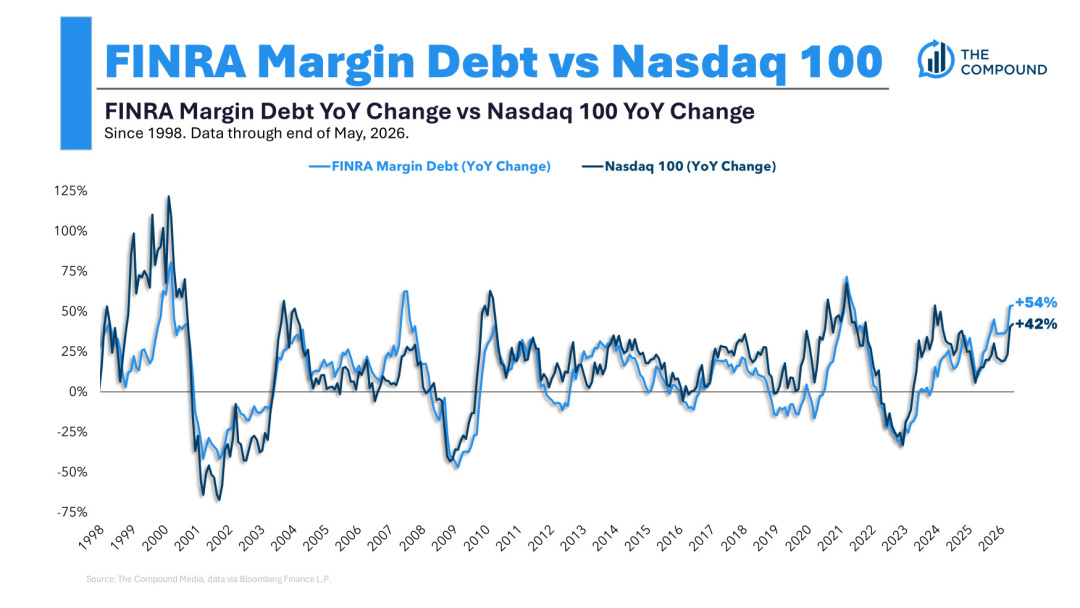
In the United States, the trend of stock market borrowing is evident as well. According to The Wall Street Journal, U.S. margin debt surged 54% to a record $1.4 trillion in May compared to the previous year, as reported by Finra. This figure does not account for leveraged exchange-traded funds (ETFs) or other financial instruments that also involve borrowing. As a result, the total level of leverage in the market is likely even higher.
While the current high levels of margin debt may not indicate an impending market collapse, they do raise concerns about potential volatility, particularly among high-flying stocks such as SK Hynix, Samsung, and Taiwan Semiconductor. These stocks have seen gains ranging from 150% to 700% this year, and such rapid appreciation can lead to significant downturns. The relationship between margin debt and stock market performance suggests that as long as the market continues to rise, margin debt will likely increase as well.
However, if the market experiences a downturn, margin debt could exacerbate losses for investors. Historical parallels, such as the 1987 crash, highlight the risks associated with high leverage during periods of rapid market growth. While the current levels of margin debt may seem alarming, they reflect the overall strength of the market rather than a direct threat to its stability. Individual investors who overextend themselves may face dire consequences, but a broader market collapse would require much higher levels of leverage.