Asian Markets Mixed as Oil Prices Rise Following Wall Street Rally

Asian shares experienced mixed results on Tuesday following a rally on Wall Street, which was supported by easing oil prices. Investors in the region are still evaluating the implications of last week's joint U.S.-Japan currency intervention. Japan's benchmark Nikkei 225 index decreased by 0.3% to 63,585.58, as the U.S. dollar rose slightly to 157.51 yen from 157.18 yen. The euro remained stable at $1.1511. The dollar had previously traded at around 160 yen before regulators intervened to bolster the yen's value, which had fallen to nearly 40-year lows.
Analysts have expressed uncertainty regarding the effectiveness of such interventions, noting that they do not address the underlying economic factors contributing to currency fluctuations, such as inflation and interest rates. A report from BMI, a unit of Fitch Solutions, highlighted that a U.S.-backed operation carries more weight than a unilateral action by Tokyo, although any U.S. involvement may be limited in scope.
For Your Trading Desk
Sponsor Spike Success.
Matthew Ryan, head of market strategy at Ebury, remarked that the recent intervention could signal a significant shift in monetary policy, enhancing confidence in a more stable outlook for the yen.
In South Korea, the Kospi index fell by 1.3% to 6,174.72. Conversely, Australia's S&P/ASX 200 index rose by 1.2% to 9,129.00. Hong Kong's Hang Seng index declined by 0.5% to 25,881.99, while the Shanghai Composite index saw a slight increase of 0.2% to 3,802.61.
Market volatility continues to affect technology stocks, particularly those in the semiconductor sector, as concerns persist regarding the sustainability of their revenue growth amid the artificial intelligence boom.
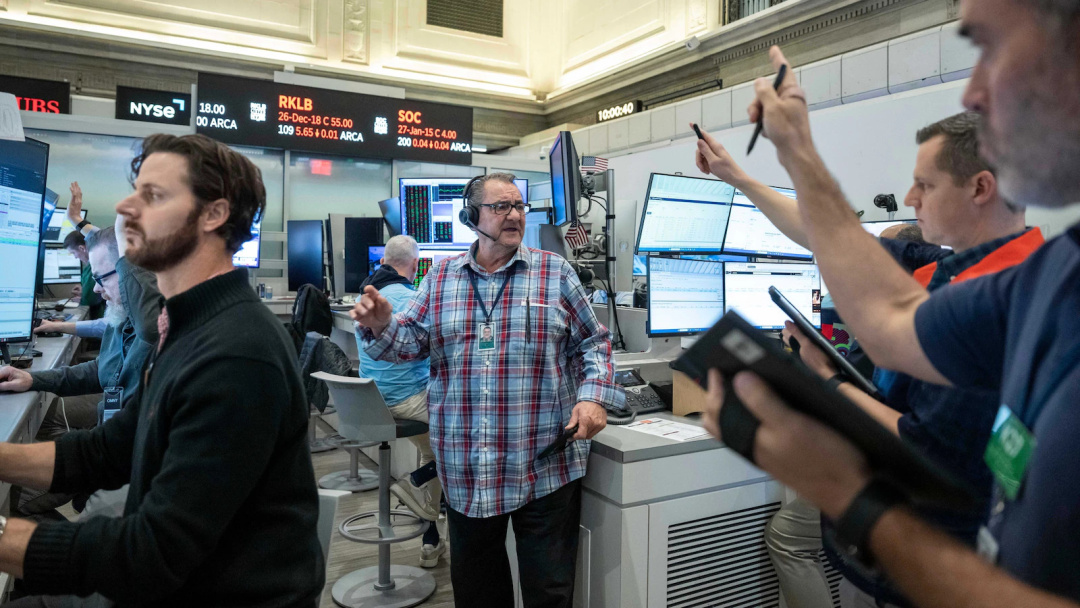
On Wall Street, stocks rallied on Monday, with the S&P 500 climbing 1.5%, just shy of its record high set earlier this summer. The Dow Jones Industrial Average surged by 693 points, or 1.3%, reaching an all-time high, while the Nasdaq composite increased by 2.1%.
In early Asian trading, benchmark U.S. crude oil prices rose by 84 cents to $81.18 per barrel, while Brent crude, the international benchmark, increased by $1.15 to $84.92 per barrel. This uptick follows a significant drop of over 5% in oil prices after President Trump announced he would refrain from launching new strikes against Iran, responding to regional allies' advice.
Last month, Brent crude prices fluctuated between $72 and $102, driven by concerns over the situation in Iran and the potential for oil tankers to navigate the Persian Gulf freely. Additionally, the yield on the 10-year Treasury note fell to 4.68% from 4.75% late Friday, remaining above its pre-war level of 3.97%.