South Korea's Kospi Index Surges Over 16% Driven by Chipmaking Stocks
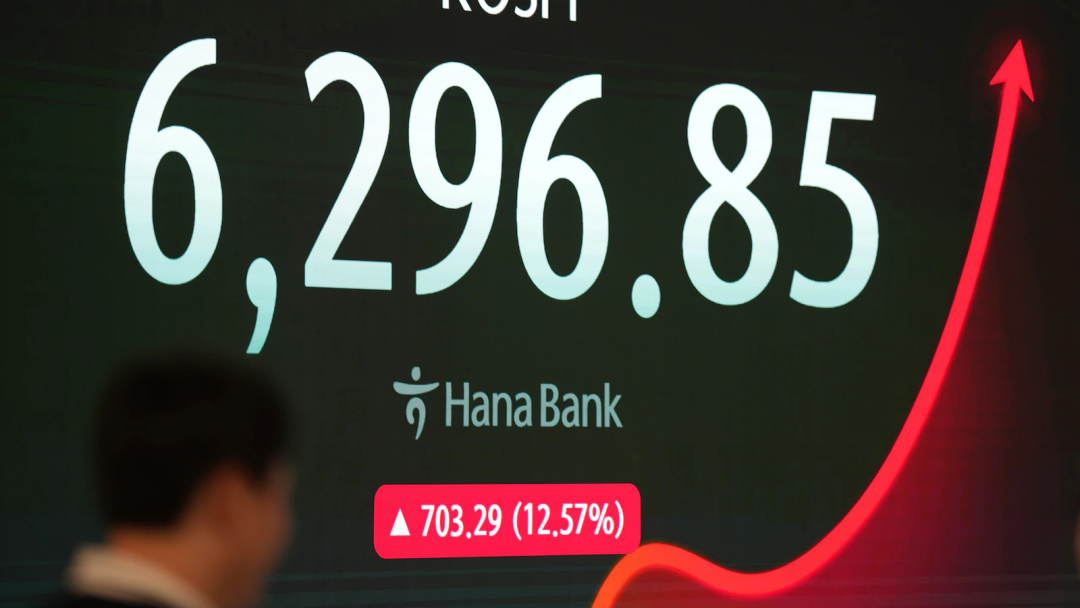
South Korea's Kospi index surged more than 16% on Friday, buoyed by a rebound in artificial intelligence-related stocks after a period of losses earlier in the week. The index opened strong, climbing to a peak of 16.5% before settling at a midday increase of 14%, reaching 6,376.68. Notably, shares of Samsung Electronics rose by 21%, and memory chipmaker SK Hynix soared by 24.6%. This recovery followed a significant decline of over 17% in the previous three days, driven by investor concerns regarding an AI bubble and increased competition from Chinese chipmakers.
The positive momentum was sparked by Microsoft's report of stronger-than-expected profits, which led to a 15.5% surge in its shares, marking the company's best performance in nearly 18 years. This news encouraged traders to return to the market, eager to purchase shares in technology companies that had recently faced skepticism about the profitability of their substantial investments in AI.
For Your Trading Desk
Sponsor Spike Success.
Despite the impressive gains on Friday, the Kospi index remains significantly below its June peak of over 9,000. Other Asian markets also reflected positive trends, with Tokyo's Nikkei 225 climbing 4.4% to 64,572.25. Notable gains were seen in multinational investment firm SoftBank Group, which increased by 15%, and chip equipment maker Tokyo Electron, which rose nearly 11%.
Market analyst Stephen Innes of SPI Asset Management commented on the rapid shift in sentiment, noting that traders quickly moved from selling AI stocks to competing for shares as confidence returned. Meanwhile, the dollar experienced fluctuations against the Japanese yen, falling sharply overnight before rebounding slightly to 160.61 yen. This volatility was attributed to suspected market intervention aimed at stabilizing the yen, which has been trading near 40-year lows.
The Bank of Japan maintained its interest rates during its recent policy meeting, a decision that was widely anticipated. Analysts suggest that the intervention to support the yen may not yield better results than in the past, but they expect the yen to stabilize around the 160 level this year before potentially rebounding next year.
In broader Asian trading, Taiwan's Taiex index surged over 7%, while Australia's S&P/ASX 200 added 0.4%. Hong Kong's Hang Seng index edged up 0.1%, and the Shanghai Composite index rose by 0.6%. Oil prices, however, declined due to ongoing tensions in the Strait of Hormuz, a crucial oil transport route. Brent crude fell by 1.3% to $85.76 per barrel, while benchmark U.S. crude dropped 1.5% to $82.32 per barrel. Analysts noted a slight increase in oil flows through the Strait, which may help alleviate supply pressures, although overall numbers remain limited. On Wall Street, the S&P 500 gained 1.7%, the Dow Jones Industrial Average rose by 1.2%, and the Nasdaq composite increased by 2.8% on Thursday.