KOSPI Index Plummets 35% in July Amid Semiconductor Sector Crisis
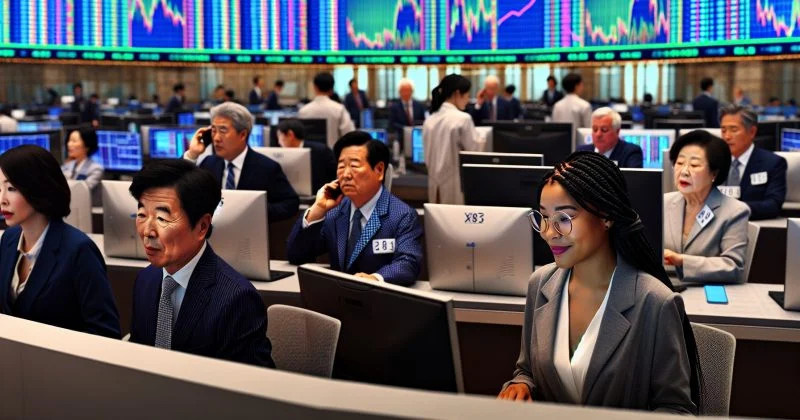
South Korea's benchmark KOSPI index has suffered a staggering 35% drop in July, prompting multiple activations of circuit breakers as the market attempts to stabilize. The decline is largely attributed to a meltdown in the semiconductor sector, fueled by concerns that Chinese chipmakers are narrowing the competitive gap with established Korean giants. On July 28, the KOSPI fell by 10.84%, closing at 6,023.66, marking its largest single-day decline since March. Major players like Samsung Electronics and SK Hynix saw their stock prices plummet by 14.4% and 14.7%, respectively, during this session.
The KOSPI had peaked at approximately 9,114 in June, but the recent downturn has erased nearly all of those gains, leaving the index around 6,000. Despite this, the KOSPI remains up about 43% year-to-date, indicating that the losses in July have effectively wiped out months of progress in just a few weeks. The underlying issue appears to be the structural concentration of the South Korean stock market, which is heavily weighted towards semiconductor companies. When negative sentiment affects these firms, the entire index is impacted.
For Your Trading Desk
Sponsor Spike Success.
Throughout July, multiple circuit breakers have been triggered, reflecting the heightened volatility in the market. Retail traders, who have become increasingly active in Korean equities, are believed to be contributing to this instability. Concurrently, trading volumes on Korean crypto exchanges have plummeted, with reports indicating that they fell to as low as 1.6% of KOSPI turnover at one point. Instead of reallocating funds from equities to cryptocurrencies, investors seem to be retreating from risk assets altogether. The so-called "kimchi premium," which typically sees Korean crypto prices higher than those on global exchanges, is currently absent as capital remains tied up in declining equity positions or is sidelined.
Chinese manufacturers have been ramping up their investments in memory chip production, and recent developments suggest they are making significant strides in yield rates and technology that were previously thought to be years away. This trend is compounded by broader weaknesses in the global technology sector, with Korean semiconductor stocks declining at a faster rate than their international counterparts due to the KOSPI's structural vulnerabilities.
The relationship between the decline in Korean equities and the contraction in crypto trading volumes raises questions about the perceived role of Bitcoin and other digital assets as safe havens during market downturns, particularly when the selling pressure originates from a major crypto-active market like South Korea.
While the KOSPI's year-to-date gain of 43% creates a complex situation for investors, those who entered the market earlier in the year may still be in profit. However, if the index continues to decline and these gains diminish, it could lead to forced liquidations and a second wave of selling. The activation of circuit breakers serves to prevent rapid crashes but also restricts liquidity, leaving investors with the difficult choice of either panic-selling when trading resumes or holding through further potential declines.