Elon Musk Highlights Key Chip Supply Win for Tesla's AI Goals
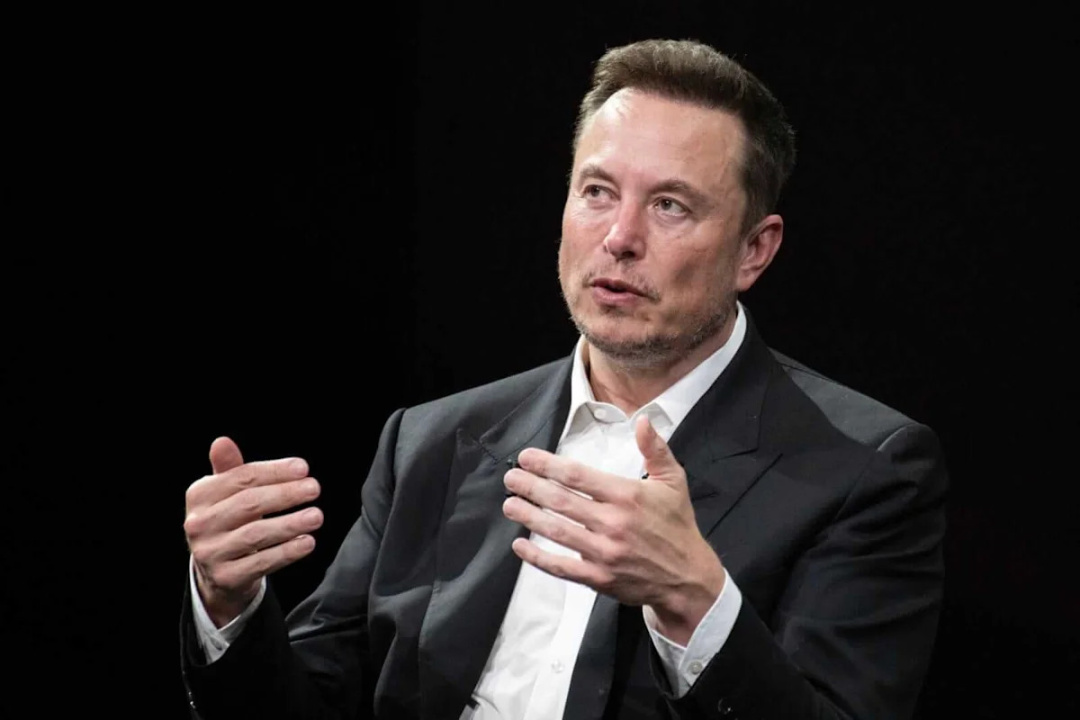
Elon Musk provided Tesla investors with important insights regarding a critical supply issue during a recent update. On July 22, he revealed that Micron has granted Tesla a substantial allocation of memory chips under favorable terms, indicating a potential long-term partnership. Musk noted that memory prices in the industry have surged dramatically, marking the largest price increase he has ever witnessed. This development is particularly significant as Tesla seeks to secure a more reliable supply of memory chips at a time when they are becoming increasingly scarce and costly due to heightened demand from the AI sector. Apple CEO Tim Cook has referred to this situation as a "hundred-year flood," underscoring the severity of the chip shortage.
The implications of the Micron deal are especially pertinent following Tesla's recent quarterly performance. The company's Q2 CY2026 report, released on July 23, showed solid sales figures, with revenue reaching $28.24 billion, surpassing the $26.71 billion estimate. However, the non-GAAP earnings per share (EPS) of $0.33 fell short of the expected $0.54, highlighting ongoing challenges in translating sales growth into profitability. Year-to-date, Tesla's stock has declined by 30.4%, although it has seen a slight increase of 2.54% over the past year.
For Your Trading Desk
Sponsor Spike Success.
Despite a market capitalization of $1.2 trillion, Tesla's forward price-to-earnings ratio of 279.53 and price-to-sales ratio of 14.81 are significantly higher than the sector medians of 16.73 and 0.88, respectively. The company's recent earnings history has also raised concerns, with a notable miss in the quarter ending June 2026, where it reported $0.04 against an estimate of $0.32, reflecting an 87.5% shortfall.
Operationally, Tesla delivered 480,126 vehicles during the quarter, but its gross margin fell to 16.8%, and operating margin decreased to 1.4% from 4.1%. Free cash flow margin also dropped to -3.9% from 0.6%. The company has shifted its focus towards lower-priced Model 3 and Model Y vehicles after discontinuing the more expensive Model S and Model X. Management has indicated that increased spending on AI and new technologies is a priority, contributing to a 73.3% decline in operating cash flow to $3.937 billion and a decrease in net cash flow to $39 million.
Musk's agreement with Micron is a crucial step in securing essential chips for AI training and inference at competitive prices. This strategy extends beyond a single supplier relationship, as Musk has discussed the Terafab project with ASML and Tesla's efforts to develop its own AI chips, which would enhance control over supply and costs in the future. Terafab, introduced in March, aims to integrate chip design, fabrication, and advanced packaging, targeting over 1 terawatt of AI computing capacity annually. Musk has emphasized the need for this project due to the semiconductor industry's inability to scale rapidly enough to meet anticipated demand.
The development of the Optimus humanoid robot adds another dimension to Tesla's plans, although Musk has acknowledged that the robot currently lacks a supply chain. This is critical, as the success of the robot initiative hinges on securing the necessary chips, parts, and manufacturing capabilities for scaling beyond initial demonstrations. Progress in the robotaxi sector is beginning to provide a tangible use case for Tesla's hardware investments, with the company starting to monetize its fleet in Florida, creating an early revenue stream while continuing to invest in computing and chip technology.
Overall, Micron's allocation represents a practical victory for Tesla, easing supply chain pressures at a crucial time. However, the company's earnings remain under scrutiny, and analysts are watching closely to see if this chip access translates into improved financial results. The upcoming quarter is expected to be challenging, with analysts projecting an EPS of $0.36 for the quarter ending September 2026, down from $0.37 the previous year, indicating a 2.7% year-over-year decline. Bank of America maintains a bullish outlook, issuing a "Buy" rating with a $460 price target, citing Tesla's potential to efficiently scale its technology and lead in the robotaxi market. The broader analyst consensus remains supportive, with a "Moderate Buy" rating and an average price target of $418.06, suggesting a potential upside of approximately 33.6%. While Micron's chip allocation is a positive development, Tesla's stock may continue to experience volatility as investors weigh the implications of supply news against ongoing earnings challenges. The true test will be whether advancements in robotaxi, Optimus, and Tesla's chip initiatives yield tangible progress in the future.