New macOS Malware Linked to North Korea Targets Analysts
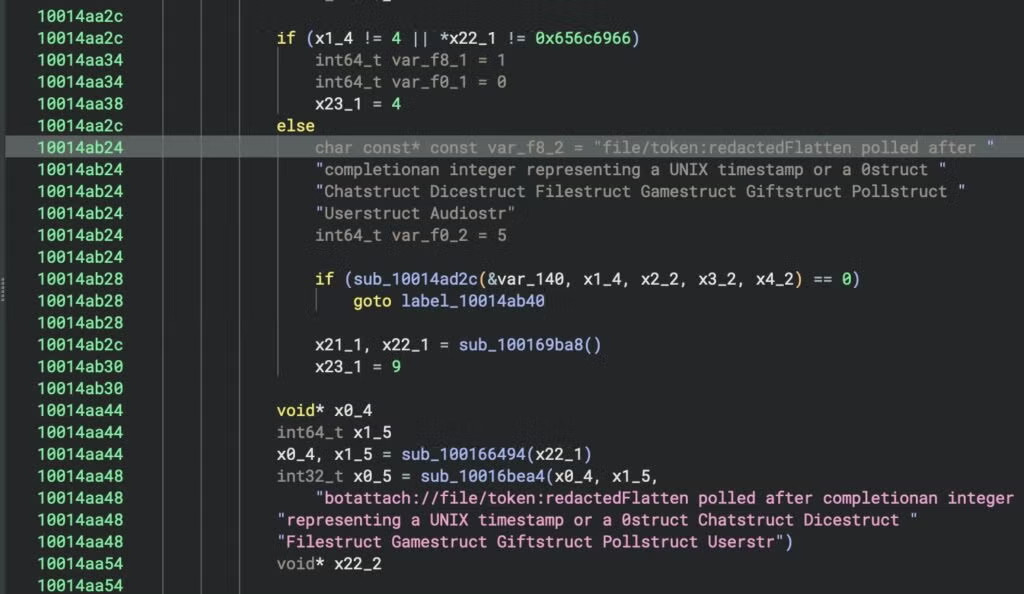
SentinelLabs researchers have uncovered a new macOS malware, dubbed macOS.Gaslight, which surfaced in early June following an Apple XProtect update that flagged a VirusTotal sample uploaded on May 22. This Rust-based implant is designed to mislead analysts by embedding a cascade of fabricated system failure messages, effectively attempting to gaslight those analyzing it. The report from SentinelLabs highlights that the malware's structure mimics the internal prompt scaffold used by LLM triage harnesses, blurring the boundary between untrusted sample data and trusted instructions.
The malware contains a 3.5 KB payload with 38 fake system messages, including simulated token expiry notices and bogus out-of-memory alerts. These messages are crafted to confuse analysts and disrupt their evaluation process, potentially causing them to abandon or truncate their analysis before uncovering significant findings.
For Your Trading Desk
Sponsor Spike Success.
Command and control operations are conducted via Telegram's Bot API, with all payloads encrypted using AES-GCM and a unique nonce for each message. The implant is designed to evade standard proxy inspection by pinning its TLS certificate to a custom trust anchor and adapting its traffic routing based on the host's proxy settings. Notably, the malware employs a self-redaction routine that prevents sensitive bot credentials from appearing in diagnostic outputs, a novel approach compared to other documented Telegram bot malware.
The operator has access to an interactive shell with commands to identify the implant, execute shell commands, terminate processes, upload files, and halt the implant's operations. To maintain persistence, the malware uses a LaunchAgent labeled com.apple.system.services.activity, a tactic previously associated with North Korean cyber operations.
Data collection is managed by a Python stealer that activates only when enabled by the operator. This component fetches a self-contained Python interpreter and is capable of harvesting sensitive information from popular browsers, terminal histories, and system profiles, sending the collected data back to the operator via Telegram.
SentinelLabs links macOS.Gaslight to North Korean cyber activity, as indicated by Apple's XProtect rule tagging the binary under MACOS_BONZAI_COBUCH. The malware's design suggests it is part of a broader toolset intended for multiple platforms, with configurations indicating potential Linux and GitHub integrations. Analysts are advised to treat all sample contents as adversarial input to safeguard against such sophisticated threats, especially as LLM-assisted analysis becomes more prevalent in cybersecurity.