Integrating Snowflake Semantic Views with Amazon Quick Sight
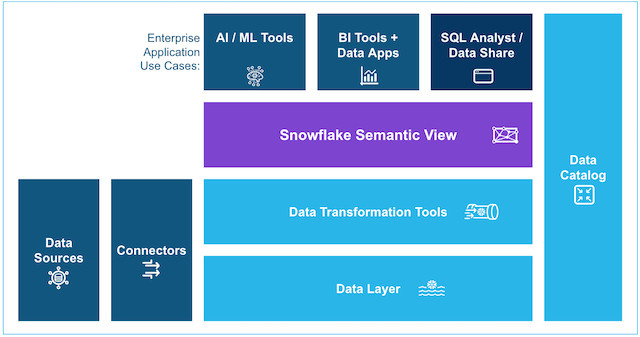
Organizations often struggle with data discrepancies, where different applications report conflicting numbers, leading to confusion and eroded trust in analytics. This issue stems from a lack of unified business logic, which typically resides within individual applications rather than at the data layer. To address this, Amazon Quick Sight and Snowflake have introduced an integration that leverages Snowflake's semantic views to provide consistent business definitions across all applications.
A semantic view in Snowflake is a schema object that attaches business definitions—such as tables, relationships, metrics, and dimensions—directly to the data. This allows any application querying the semantic view to interpret the information uniformly, thereby reducing the risk of AI hallucinations and ensuring trustworthy analytics.
For Your Trading Desk
Sponsor Spike Success.
The integration process begins with loading movie review data from Amazon Simple Storage Service (Amazon S3) into Snowflake. Users define a semantic view in SQL, which enhances the data's business context, and then utilize Cortex Analyst for natural-language queries. This setup culminates in the creation of an Amazon Quick Sight dataset and dashboard, enabling users to ask questions in plain language while relying on a governed data layer.
The tutorial provided outlines the steps necessary to complete this integration, starting with the setup of a Snowflake environment and the importation of a pre-built notebook. Users can run the notebook to create the necessary compute warehouse, database, and schema, and load the movie review data into the MOVIES database. After confirming the successful loading of data, users define the semantic view that maps raw data to business-friendly metrics and dimensions.
Once the semantic view is established, users can query their data using natural language, enhancing the accessibility of analytics. The integration also allows for the creation of interactive dashboards in Amazon Quick Sight, where users can explore data visually and create calculated fields based on the semantic definitions.
To ensure accuracy, users are encouraged to verify that the numbers match between Cortex Analyst and Amazon Quick Sight. This cross-validation reinforces the value of a single semantic layer, which provides consistent answers regardless of the tool used.
In conclusion, this integration between Snowflake and Amazon Quick Sight not only streamlines the process of data analysis but also fosters confidence in the insights derived from business intelligence tools. Organizations are encouraged to explore this integration with their own data and share their experiences with the community.