Market Volatility Raises Concerns for Retirement Savings Amid AI Boom
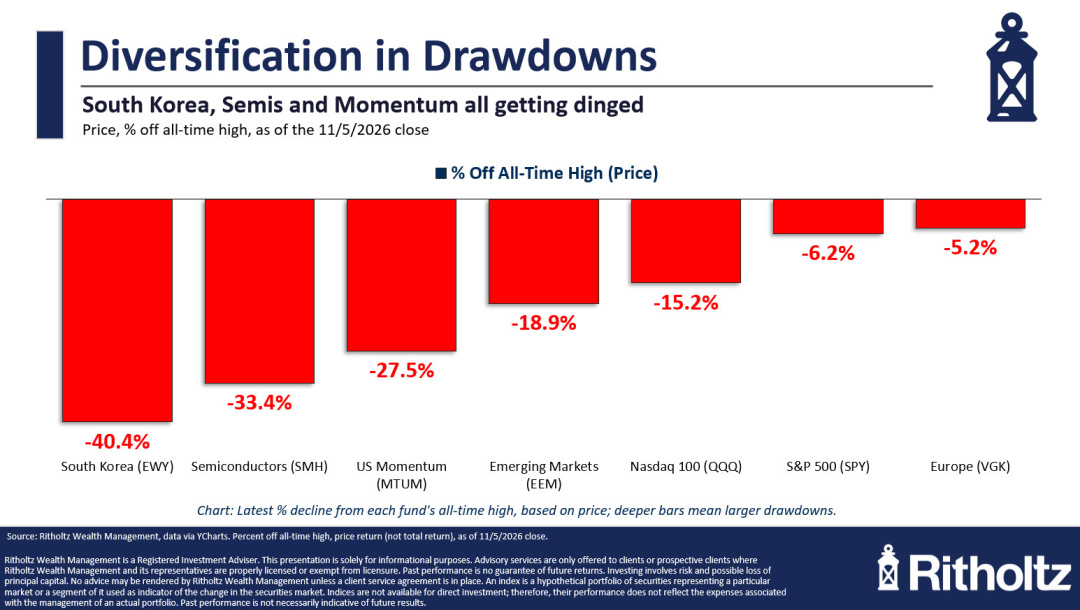
The recent downturn in stock markets, particularly the tech-heavy NASDAQ, has raised alarms among American savers regarding the future of their retirement savings. Following a significant drop on November 20, 2026, many are questioning whether the substantial investments in artificial intelligence (AI) are at risk. The NASDAQ has fallen approximately 18% since early October, resulting in a loss exceeding $4 trillion since mid-November. The broader S&P 500 index has also suffered, erasing its gains for the year.
As a finance professor and certified financial planner, I cannot definitively state whether the AI bubble has burst, but I can explain how the default model of most 401(k) plans operates, where it offers protection, and what adjustments might be necessary. Regardless of whether AI stocks rebound, the fundamental steps to safeguard a retirement account remain consistent: understand your investments, maintain a balanced asset mix, and ensure sufficient savings in low-risk funds for the years when withdrawals are necessary.
For Your Trading Desk
Sponsor Spike Success.
Most 401(k) savers typically invest in target-date funds, which are often selected as default options by employers. These funds are designed to adjust their asset allocation based on the anticipated retirement date of the investor. Approximately 55% of U.S. families possess defined contribution retirement accounts, such as 401(k)s or individual retirement accounts. Within these accounts, investment decisions are increasingly made on behalf of the savers.
In 2025, about 60% of plans managed by Vanguard automatically enrolled new employees, and when a default investment was set, 98% of savers opted for a target-date fund. Currently, target-date funds collectively hold around $4.8 trillion. Each fund comprises a mix of index funds that track specific market indices, with Vanguard's largest series primarily consisting of U.S. stocks, international stocks, U.S. bonds, and international bonds. As investors age, the allocation gradually shifts from higher-risk stocks to safer bonds.
For instance, Vanguard's 2055 fund was composed of over 91% stocks as of September 2026, reflecting the younger demographic of its investors. In contrast, the 2027 fund, aimed at those nearing retirement, had only 16% in stocks. The recent volatility in the market has put this autopilot investment model to the test, particularly highlighted by the situation with Nvidia.
Nvidia's stock experienced a dramatic decline following the U.S. midterm elections, which raised concerns about potential regulatory changes affecting AI and data centers. The company's shares plummeted over 9% in a single week, and by November 12, Nvidia's CEO announced his resignation, leading to a staggering loss of more than $1 trillion in market value within a month. While it remains uncertain whether the AI bubble has definitively burst, the ongoing decline of tech stocks, especially Nvidia, has prompted savers to reconsider the effectiveness of their retirement plans.
Target-date funds are marketed as diversified investments, often containing thousands of stocks. However, these stocks are not held in equal proportions. Index funds allocate shares based on market value, meaning that as the value of AI-related companies surged, their representation in the funds increased. By the end of 2025, the ten largest companies constituted nearly 41% of the S&P 500, with most being tech and AI firms, yet they were projected to generate only about 32% of the index's earnings.
Investors Question AI Stock Valuations Amid Target-Date Fund Concentration
This discrepancy raises concerns about whether investors are overvaluing these shares based on future profit expectations. While target-date funds can dilute the concentration of AI stocks, they do not eliminate them entirely. As of September, the ten largest companies represented 36% of Vanguard's total U.S. stock fund, with Nvidia accounting for 7%. For a 2055 fund, approximately 55% of its assets were tied to these ten companies, meaning that even minor fluctuations in their stock prices could significantly impact the fund's performance.
Moreover, diversification does not guarantee protection against market downturns. During the 2008 financial crisis, target-date funds designed for those retiring in 2010 experienced an average loss of nearly 24%. While savers may feel inclined to leave their 401(k) accounts untouched, it is essential to periodically assess three key factors. First, consider the anticipated retirement date and adjust your fund choice accordingly. Second, review the current stock allocation of your fund, as significant declines could jeopardize retirement plans. Lastly, evaluate any additional funds held, as combining multiple funds may inadvertently increase risk exposure.
For those who have opted out of target-date funds, it is crucial to analyze the fact sheets of each investment. Many may find that they own the same companies across different funds, leading to unintended concentration in specific sectors. Rebalancing investments according to a predetermined plan, rather than reacting to market predictions, is vital. Trades within a 401(k) do not incur taxes, and many plans offer automatic rebalancing features. If not, a simple guideline is to review and rebalance at least once or twice a year, ensuring that no asset class deviates more than five percentage points from the target allocation.
Additionally, consider diversifying into areas with less exposure to AI, such as U.S. value stocks, smaller companies, and international equities. While these strategies do not guarantee immunity from losses, they can help mitigate risks associated with market volatility. For younger investors, downturns can present opportunities to acquire shares at lower prices, while those nearing retirement must be cautious of sequence-of-returns risk, which can significantly impact savings if a market downturn occurs just before or after withdrawals begin.
Navigating Market Volatility: Lessons from Past Crises
The most detrimental mistake is often the most tempting: selling all investments and waiting for market stability. Historical data shows that those who remained invested during the 2008-09 financial crisis saw their balances grow significantly compared to those who exited the market. Other pitfalls to avoid include halting 401(k) contributions, chasing short-term trends, and withdrawing funds prematurely, which can result in taxes and penalties.
Lastly, while AI can provide general investment advice, it is crucial to rely on personal judgment for high-stakes financial decisions. AI may offer sound guidance on diversification and avoiding panic selling, but it lacks the ability to tailor advice to individual circumstances.