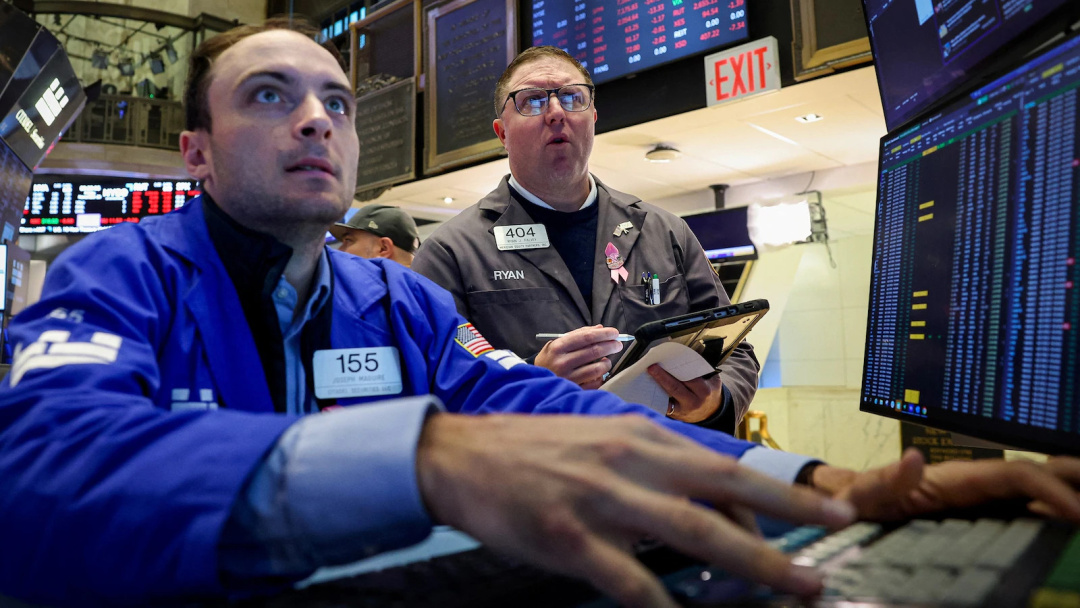
U.S. Stock Market Experiences 10% Drop Amid AI Industry Concerns

The U.S. stock market has dropped 10% from its high set last month, raising alarms among investors. This decline is attributed to growing concerns about the challenges facing the artificial intelligence industry, which has been a major driver of market gains in recent months.
Wall Street refers to this decline as a "correction," a term used to describe a significant drop that can often serve as a healthy reset for overinflated stock prices. While corrections can be unsettling, they are not uncommon and have occurred regularly throughout market history. The fear accompanying such corrections is that they may signal the onset of a bear market, characterized by a decline of at least 20%.
For Your Trading Desk
Sponsor Spike Success.
The recent surge in AI-related stocks had propelled the market to record highs in October, but a combination of factors has led investors to reassess their optimism. Concerns have emerged regarding whether the rapid rise in stock prices for AI companies was justified, particularly as the demand for essential components like memory and processors may not sustain if profitability does not meet expectations.
Additionally, the substantial investments required for developing advanced AI technologies and infrastructure have raised red flags. Companies in the sector are increasingly turning to bond markets for funding, and with the Federal Reserve expected to raise short-term interest rates, borrowing costs could escalate for these firms.
Regulatory pressures are also mounting, particularly with a new Congress that has shown intentions to impose stricter regulations on the AI industry. Newly elected Democratic governors in key states like Texas and Georgia have expressed opposition to new data center constructions, further complicating the landscape for AI investments.
Nvidia's Leadership Change Intensifies Market Volatility
The situation has been exacerbated by the recent turmoil surrounding Nvidia, a key player in the AI sector. The company's stock has suffered following the unexpected departure of its co-founder and CEO, Jensen Huang, which has contributed to the broader market sell-off.
Despite the challenges, some analysts believe that the current downturn may not indicate a long-term negative trend for the tech sector. They argue that the sell-off could be a necessary correction that allows the market to recalibrate and focus on companies that can deliver on their promises.
Market Correction May Pave the Way for Future Growth
Mark Hackett, chief market strategist at Nationwide, suggests that if this correction leads to a thorough market washout, it could ultimately set the stage for a more sustainable rally as the year progresses. Historically, the S&P 500 has experienced corrections approximately every couple of years, with the last one occurring in March 2025. The average correction results in a loss of about 14.1%, but the market typically recovers its losses within a few months.
As the market navigates these turbulent waters, investors are urged to remain vigilant and discerning about their investments in the AI sector. While the technology is not going away, the current environment may require a more selective approach to investment in companies that can truly deliver on their growth potential.