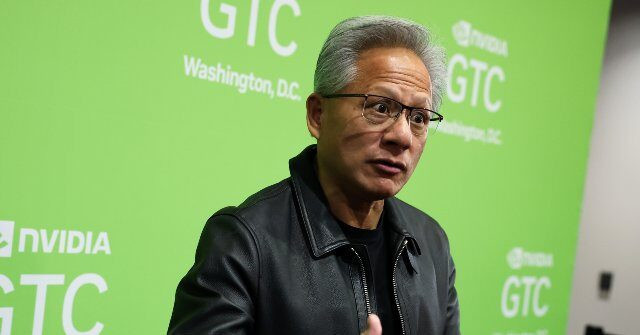
Nvidia Shares Recover 6% as Concerns Over CEO Huang's Job Ease
Nvidia shares experienced a notable recovery, bouncing back by 6% from their intraday low as investor sentiment shifted regarding the job security of CEO Jensen Huang. Despite this rebound, the stock still trades 5% lower than its previous closing price, indicating ongoing volatility.
The day's trading unfolded in two distinct phases. Initially, shares plummeted as traders began to factor in a real possibility that Huang could be ousted from his position. However, as the likelihood of his removal diminished, buyers returned to the market, driving the stock up from its lowest point.
For Your Trading Desk
Sponsor Spike Success.
The situation illustrates the depth of the decline, as a 6% increase from the low while still ending up 5% below the prior close suggests that the stock had fallen approximately 10% at its lowest point during the trading session.
Nvidia's unique position in the tech industry is underscored by Huang's long tenure. Co-founding the company in 1993, he has been at the helm for decades, making him one of the longest-serving founder CEOs in the tech sector. His leadership has been pivotal in steering Nvidia's transition from a focus on gaming graphics cards to becoming a leader in AI chip production.
Market Reaction Reflects Leadership's Impact on Nvidia's Stability
The market's reaction to Huang's potential job loss highlights the deep connection between his leadership and Nvidia's identity. Analysts have raised concerns about the absence of a clear successor, suggesting that any uncertainty regarding Huang's future directly impacts perceptions of the company's stability.
Nvidia's Stock Recovery Signals Renewed Confidence in Leadership
Nvidia's stock is also significant in the broader market context, as it holds considerable weight in major indexes and tech-focused investment funds. Consequently, fluctuations in its stock price can affect portfolios that do not directly include Nvidia shares.
The partial recovery of Nvidia's stock serves as a signal of the market's confidence in Huang's leadership. Traders were quick to re-enter the market once the fears of his dismissal subsided, indicating that Huang's continued presence is seen as valuable to the company's future.