Japan's Stock Market Faces Volatility Amid AI Investment Concerns
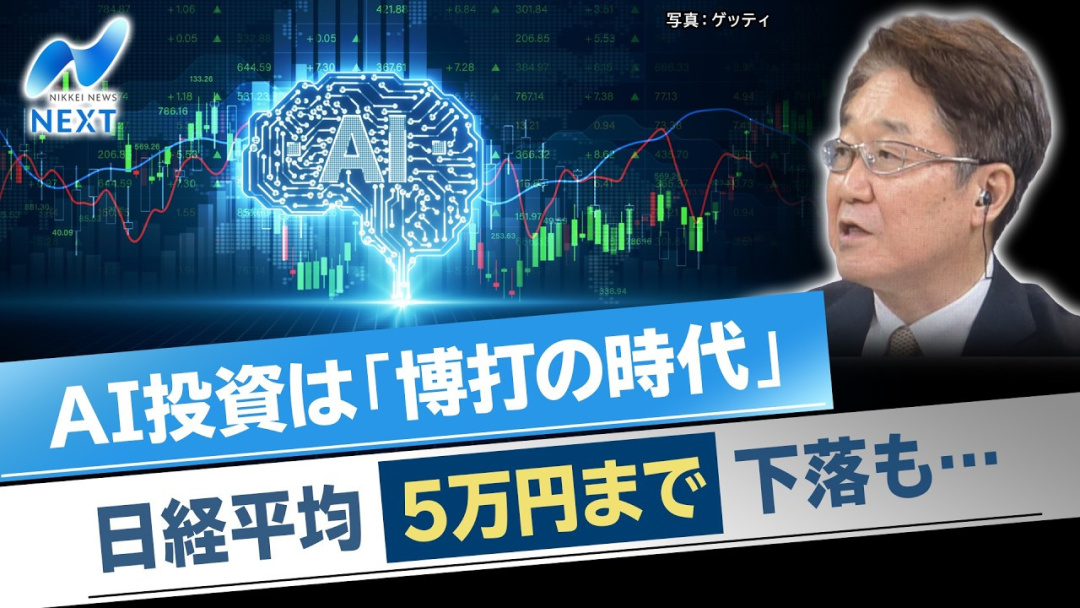
Japan's stock market is currently facing notable volatility as uncertainty surrounding artificial intelligence investments continues to rise. Masamitsu Oki, investment director at Five Star Asset Management, has expressed concerns that AI-related stocks have entered a phase resembling gambling, with investors grappling with significant uncertainty regarding the long-term prospects of the industry.
This warning comes in the wake of substantial selling pressure on shares of AI and semiconductor companies, which had previously attracted considerable investment based on expectations of sustained growth. The recent political landscape shifted dramatically following the Democratic Party's landslide victory in the U.S. midterm elections, raising fears that tighter regulations could hinder the construction of data centers, particularly in states where such facilities have become contentious political issues.
For Your Trading Desk
Sponsor Spike Success.
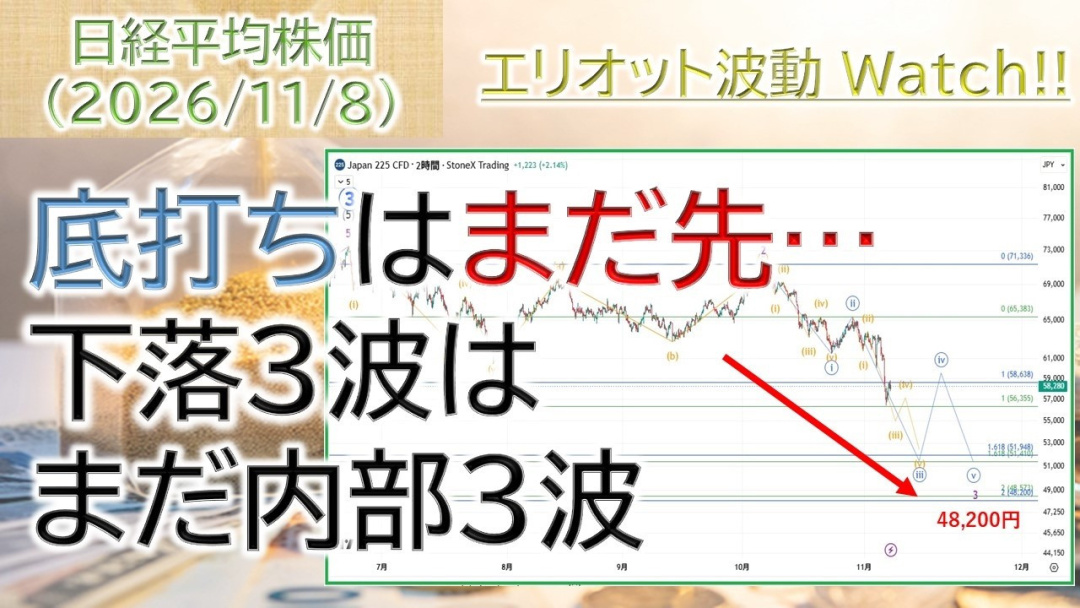
The Nikkei 225 index experienced a sharp decline on November 6, only to rebound by over 1,000 points on November 9, underscoring the increasingly volatile trading environment for technology-related shares. Oki noted that while investors had anticipated a Democratic victory, the magnitude of the outcome unsettled many, leading to concerns that political opposition might translate into restrictions on data center investments.
Despite subsequent comments suggesting that spending on AI infrastructure would persist, along with expectations that data center development could shift to more favorable locations, the market's recovery was largely viewed as a reaction to excessive selling rather than a sign that underlying concerns had dissipated. Oki emphasized that investors currently lack a reliable basis for predicting the future landscape of the AI industry, making it difficult to forecast which companies will emerge as winners or how the technology will reshape existing markets.
The ongoing influx of capital into AI-related companies has created a scenario where even minor shifts in expectations can lead to disproportionately large movements in share prices. Oki characterized this environment as having a gambling-like quality, with substantial investments being made in a technological transformation whose ultimate commercial implications remain uncertain.
Japanese semiconductor firms and manufacturers of chipmaking equipment have been particularly susceptible to the recent market corrections. Oki pointed out that their share-price declines have generally outpaced those of major U.S. hyperscalers, the tech companies responsible for operating vast computing and data center networks. Previously, Japanese companies had garnered significant interest as suppliers of the necessary equipment and materials for expanding AI infrastructure, but this exposure has now become a liability as investors reassess the pace of future data center construction.
Oki highlighted that companies heavily reliant on semiconductor capital expenditures are especially vulnerable to any indications that U.S. tech giants may reduce or delay their spending. He cited Kioxia as an example of how concentrated buying positions have contributed to recent market instability, noting that investors had accumulated substantial long positions in certain semiconductor stocks while short-selling activity remained relatively limited.
As a result, the market's capacity to attract additional buyers has diminished, leaving prices susceptible to declines when sentiment shifts. Oki remarked that some companies are trading at unusually low price-to-earnings ratios despite maintaining strong earnings prospects, which under normal circumstances might attract bargain hunters. However, the weight of existing positions and the recent intensity of speculative buying have hindered prices from recovering as strongly as their fundamentals would suggest.
This situation reflects an extreme phase of market enthusiasm followed by a correction, where the balance between buyers and sellers has become disconnected from underlying corporate performance. To evaluate whether AI-related stocks have fallen too far, Oki compared valuations at the end of 2025 with those recorded around the market peak on June 25, 2026. He found that while share prices at the end of 2025 had not fully incorporated expectations for a dramatic acceleration in capital expenditures by hyperscalers, by June 25, investors had priced in an exceptionally optimistic outlook for AI investment and semiconductor demand.
Oki believes that reasonable valuations likely lie somewhere between these two extremes, indicating that despite the recent correction, some AI-related companies still possess significant potential for recovery based on their underlying business prospects. However, he cautioned that attractive valuations alone do not guarantee an immediate rebound, as the market has experienced excessive buying followed by a period where positive and negative developments have competed for investor attention.
Market Dynamics Shift as Anthropic's IPO Approaches
Selling pressure has often outweighed new demand, even when companies continue to report favorable operating conditions. Consequently, Oki asserts that a significant gap has emerged between share prices determined by trading conditions and valuations supported by corporate fundamentals. The upcoming initial public offering of U.S. AI developer Anthropic, which is seeking to list its shares in November, represents another major test for the AI investment boom. Previously associated with valuation expectations nearing $2 trillion, investor estimates have since declined to around $1.5 trillion amid concerns regarding the sustainability of AI spending.
Anthropic's IPO could become one of the largest in stock market history and serve as a crucial indicator of investor appetite for companies developing advanced AI models. Oki suggested that the immediate market reaction to the listing might be relatively neutral, but warned that its broader implications could be more complex. A large IPO could absorb significant investment capital that might otherwise flow into existing listed companies, potentially exerting additional pressure on other technology stocks.
Moreover, Oki pointed out the extensive risk disclosures in Anthropic's prospectus, which reflect the technological, financial, and societal uncertainties surrounding advanced AI, including the potential for unforeseen developments as increasingly powerful systems are deployed. He noted that investors already harbor concerns that the rapid expansion of AI could lead to unexpected consequences, and rather than alleviating these concerns, Anthropic's listing documents could further highlight the risks associated with the technology.
In addition to the uncertainties surrounding AI, the industry is also facing challenges related to Nvidia, the U.S. semiconductor company whose graphics processing units are pivotal to the global expansion of AI computing. Recent reports have surfaced regarding Nvidia's CEO Jensen Huang and his involvement in a situation that raises potential intelligence and corporate governance concerns. While Nvidia has stated that it has no reason to believe that national security information or corporate secrets were compromised, the implications of Huang's situation could be significant, particularly given his close association with the company's success and strategic direction.
Oki compared the potential impact of Huang's situation to the departure of prominent leaders from other major companies, suggesting that while the direct effect on business fundamentals might be limited, losing such a key figure could substantially alter investor perceptions. This is especially critical for Nvidia, as other semiconductor manufacturers and technology companies are developing alternative chips to compete with its GPUs. Oki believes that Huang's leadership has been instrumental in reinforcing confidence in Nvidia's technological advantages and industry position, and without him, investors may become more receptive to arguments that competing chipmakers could eventually challenge Nvidia's dominance.
Given the current landscape, Oki recommends that investors pay closer attention to companies with diversified earnings streams rather than concentrating solely on businesses reliant on the continued expansion of AI infrastructure. He identified chemical manufacturers and electronics-related firms with substantial revenue from non-AI operations as potentially more resilient investments. These companies may maintain profitability even if enthusiasm for AI technology wanes significantly.
At the same time, Oki emphasized that the adoption of AI across corporate operations is likely to persist, regardless of whether investment in data centers slows. Businesses are expected to increasingly integrate AI into their existing systems, creating demand for software integration, IT services, and modernization of corporate infrastructure. Cybersecurity is another area likely to attract sustained investment as companies respond to emerging threats and the growing complexity of digital systems.
Navigating Uncertainty in Japan's AI Investment Landscape
Oki anticipates that companies will undertake extensive upgrades to their technology infrastructure to accommodate AI applications while enhancing security measures. He identified Fujitsu and other established providers of corporate information systems as potential beneficiaries of this transition, as their expertise in designing, integrating, and maintaining large enterprise systems could become increasingly valuable as companies move from experimenting with AI to incorporating it into everyday operations.
As the AI investment cycle evolves, Oki's assessment suggests that the next stage may favor companies capable of generating sustainable earnings from practical applications rather than those relying primarily on expectations of continued infrastructure expansion. For Japanese equities, the immediate outlook remains uncertain as investors navigate the potential for tighter U.S. regulations, reduced data center spending, shifting semiconductor demand, and concerns regarding the leadership of major technology firms. While the recent rebound in the Nikkei suggests that some of the selling may have been excessive, Oki cautions that investors are still working to determine the appropriate value of businesses operating in an industry undergoing rapid and unpredictable change. The possibility of the Nikkei Average dropping toward 50,000 remains part of the broader downside scenario, although Oki's analysis also points to considerable recovery potential in selected stocks whose valuations have fallen below levels justified by their fundamentals. With the future commercial structure of the AI industry still unclear, Oki expects sharp fluctuations to remain a defining feature of the market, making the ability to distinguish sustainable earnings from speculative expectations increasingly important for investors.