Market Drawdowns Highlight Importance of Diversification
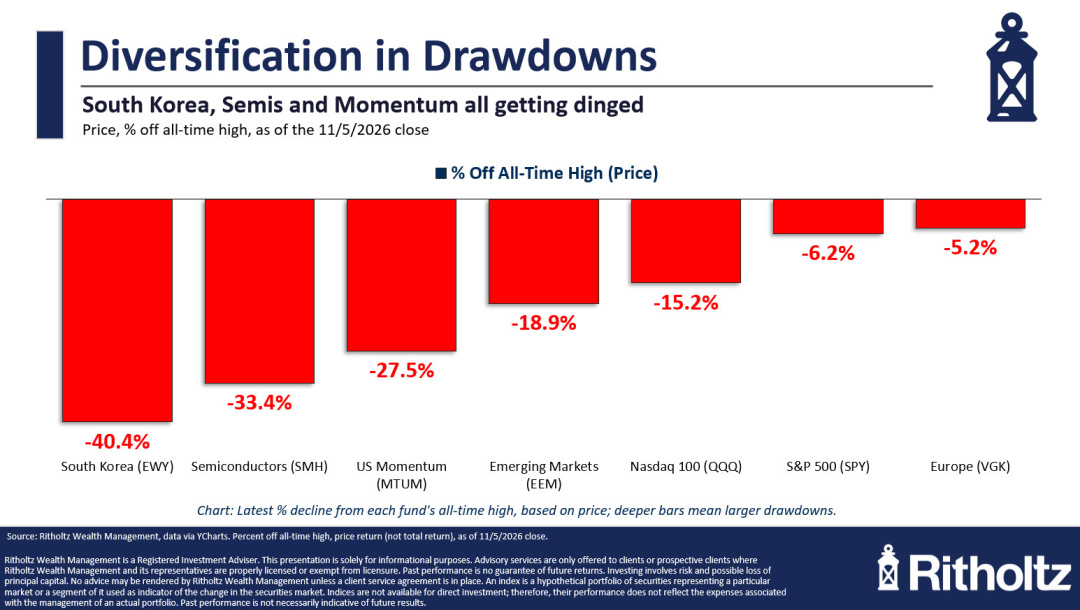
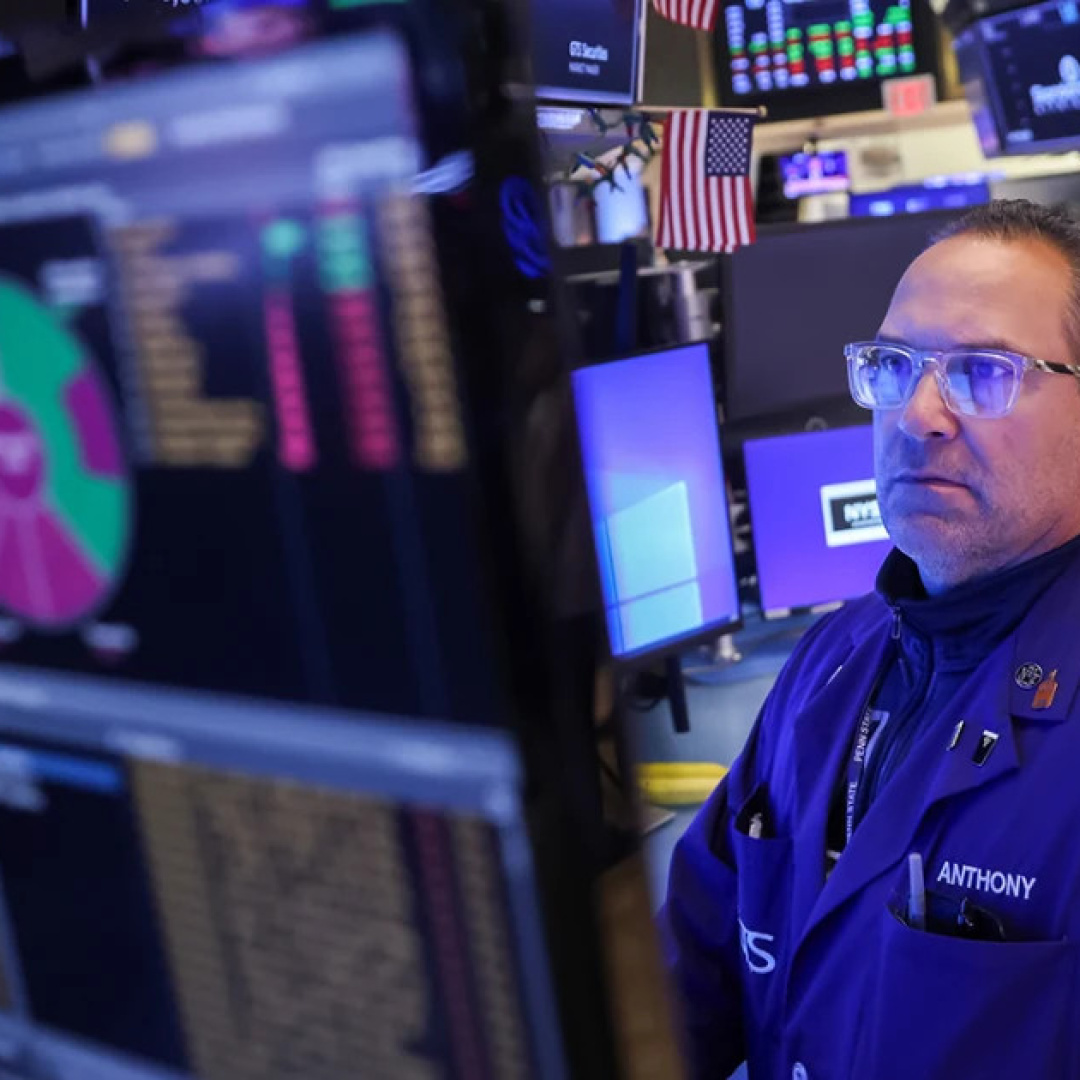
Thursday marked a challenging day for the stock market, particularly impacting technology and AI stocks. The S&P 500 experienced a decline of more than 4%, while the Nasdaq 100 fell by 5.5%. Emerging markets were not spared, dropping 6%, and semiconductor stocks saw a significant plunge of over 11%. South Korea's market also faced a steep decline of nearly 14%.
In times of market volatility, it's crucial to recognize that not all drawdowns are equal. Recent data indicates varying levels of decline across different sectors and markets. For instance, momentum stocks have shown extreme volatility this year, characterized by rapid gains followed by sharp losses. This pattern is typical; areas that have seen substantial gains often face significant corrections.
For Your Trading Desk
Sponsor Spike Success.
Despite the overall downturn, the S&P 500's total decline is just over 6%, which is noteworthy given the severe losses in the tech sector. Analyzing the drawdowns across S&P sectors reveals that technology is nearing bear market territory, with industrials, communication services, and energy stocks also experiencing double-digit declines. Conversely, sectors such as materials, real estate, financials, health care, and consumer staples have remained relatively stable, with declines of less than 3%. This stability in other sectors has helped cushion the impact of the tech sector's struggles.
Historically, index funds have been a favored investment strategy, and this trend continues to be relevant, especially during periods of rapid market changes. The current AI cycle has demonstrated that while one may be correct about underlying fundamentals, stock performance can deviate significantly due to shifting market expectations. The pace at which these expectations change can be astonishing, making it difficult to predict which stocks will emerge as winners or losers.
The volatility seen in stocks like Meta illustrates this point well. Over the past ten months, the stock has experienced dramatic fluctuations, reflecting the broader market's unpredictable nature. While investing in the S&P 500 or Nasdaq 100 may not guarantee immediate success, these index funds provide a diversified approach that increases the likelihood of capturing future winners.
Navigating Drawdowns and Market Corrections
It's important to note that index funds are not immune to drawdowns, and larger corrections are inevitable. This year has been relatively calm compared to historical volatility, where the average intra-year peak-to-trough drawdown for the S&P 500 since 1990 has been around 14%. For context, the S&P was down 9% during the outbreak of the Iran war, while the current downturn has seen a decline of only 6%.
As investors navigate these uncertain times, it may be prudent to reassess their tolerance for losses. Long-term investors understand that volatility and corrections are inherent to the investing process. Stocks tend to reach their lowest points when market sentiment is at its bleakest, only to rebound and reach new all-time highs. Predicting the timing of these recoveries remains a challenge.
In a recent discussion, Michael and I explored the impact of AI stocks, the advantages of diversification, and the current market landscape.
Understanding Market Dynamics
As the market continues to evolve, understanding the dynamics at play is essential for investors. The interplay between different sectors and the broader economic environment will shape investment strategies moving forward. Staying informed and adaptable will be key to navigating the complexities of the market.
In conclusion, while the current market conditions may be daunting, they also present opportunities for those willing to diversify and maintain a long-term perspective. Investors should remain vigilant and prepared for the inevitable ups and downs that characterize the stock market.