Stocks Plunge as Investors React to Midterm Election Results

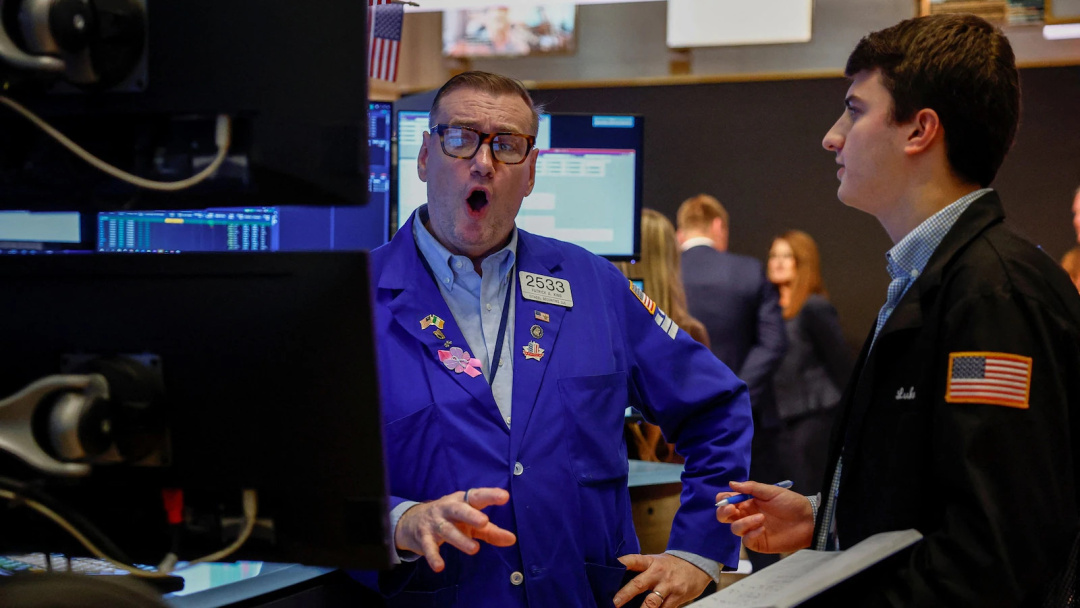
U.S. stocks experienced a significant decline on Thursday, a day after a strong post-election rally, as investors sold off technology shares. Concerns arose that the Democratic victories in the midterm elections could slow the growth of the artificial intelligence infrastructure sector. The S&P 500 fell more than 3 percent during morning trading, marking its worst day since the selloff in April 2025 that followed President Trump's announcement of sweeping tariffs. The Dow Jones Industrial Average lost over 1,000 points, giving back more than half of Wednesday's gains.
Technology shares were at the forefront of the market retreat. The Nasdaq Composite dropped approximately 4 to 5 percent, trading more than 10 percent below its record close in October. A close below this threshold would confirm the index's second correction of the year. The Nasdaq 100, which tracks the largest non-financial companies on the exchange, saw a decline of as much as 6.24 percent.
For Your Trading Desk
Sponsor Spike Success.
Within the S&P 500, technology stocks led the decline, falling about 5.1 percent. Other sectors also saw losses, with consumer discretionary down roughly 4 percent, industrials falling about 2.2 percent, and materials and communication services dropping 1.9 percent and 1.8 percent, respectively. Financials lost 1.8 percent, while real estate slipped 1.4 percent. In contrast, defensive sectors performed better, with energy rising about 0.6 percent and consumer staples gaining roughly 0.3 percent.
Some of the most popular AI-related stocks suffered the sharpest losses as investors reassessed companies reliant on continued spending for chips, computing capacity, and data-center equipment. Nvidia and Broadcom each fell about 9 percent, while Oracle also saw a similar decline. The iShares Semiconductor ETF dropped more than 11 percent, and both Tesla and SpaceX lost around 10 percent.
Companies renting out AI computing capacity also faced significant losses. CoreWeave fell about 14 percent, Nebius slid 17 percent, and IREN shed 19 percent, extending their losses from the previous day. Qualcomm dropped about 13 percent, despite beating analysts' earnings estimates, as its earnings outlook disappointed investors.
Political Shifts Raise Concerns for Data Center Development
The election results introduced a political challenge to an industry already grappling with the costs of expansion. Democrats secured majorities in both the House and Senate, raising concerns about increased scrutiny and restrictions on new data centers. Texas emerged as a particular concern, with Democrat Gina Hinojosa, who defeated Republican Gov. Greg Abbott, campaigning for a moratorium on data-center development. Developers in Texas were already facing a suspension of approvals under Abbott's administration.
Data center-related measures appeared on ballots in at least 41 jurisdictions across 10 states, with voters approving moratoriums or restrictions in 40 of those areas. This outcome is seen as a clear indication that the midterm elections were pivotal for the AI sector.
Dan Ives, a technology analyst at Yorkville Ives, estimated that about 10 percent of planned U.S. data centers may no longer proceed. He noted that Texas accounts for approximately 25 to 30 percent of expected data-center capacity. UBS analysts also warned that potential construction pauses could jeopardize around 30 percent of expected U.S. data-center capacity additions by 2028.
Market Resilience Tested Amid Economic Indicators and Election Fallout
The slowdown in construction could lead to reduced orders for semiconductors, servers, cooling systems, and power equipment, impacting businesses that have expanded to meet demand from the AI industry. Thursday's market plunge marked a stark reversal from the initial positive response to the election results. The Dow had surged more than 1,500 points on Wednesday, while the S&P 500 and Nasdaq each gained over 1 percent.
Despite the declines, the stock market had shown resilience in the face of encouraging economic news, with weekly applications for unemployment benefits falling below economists' forecasts. Investors are now looking ahead to Friday's monthly employment report. European stock indexes fared better than their U.S. counterparts following Wednesday's steep decline in oil prices, with oil recovering some ground on Thursday, trading around $90 a barrel for U.S. crude and near $97 for Brent.