Wall Street Rallies Over 1,000 Points After Democratic Election Wins

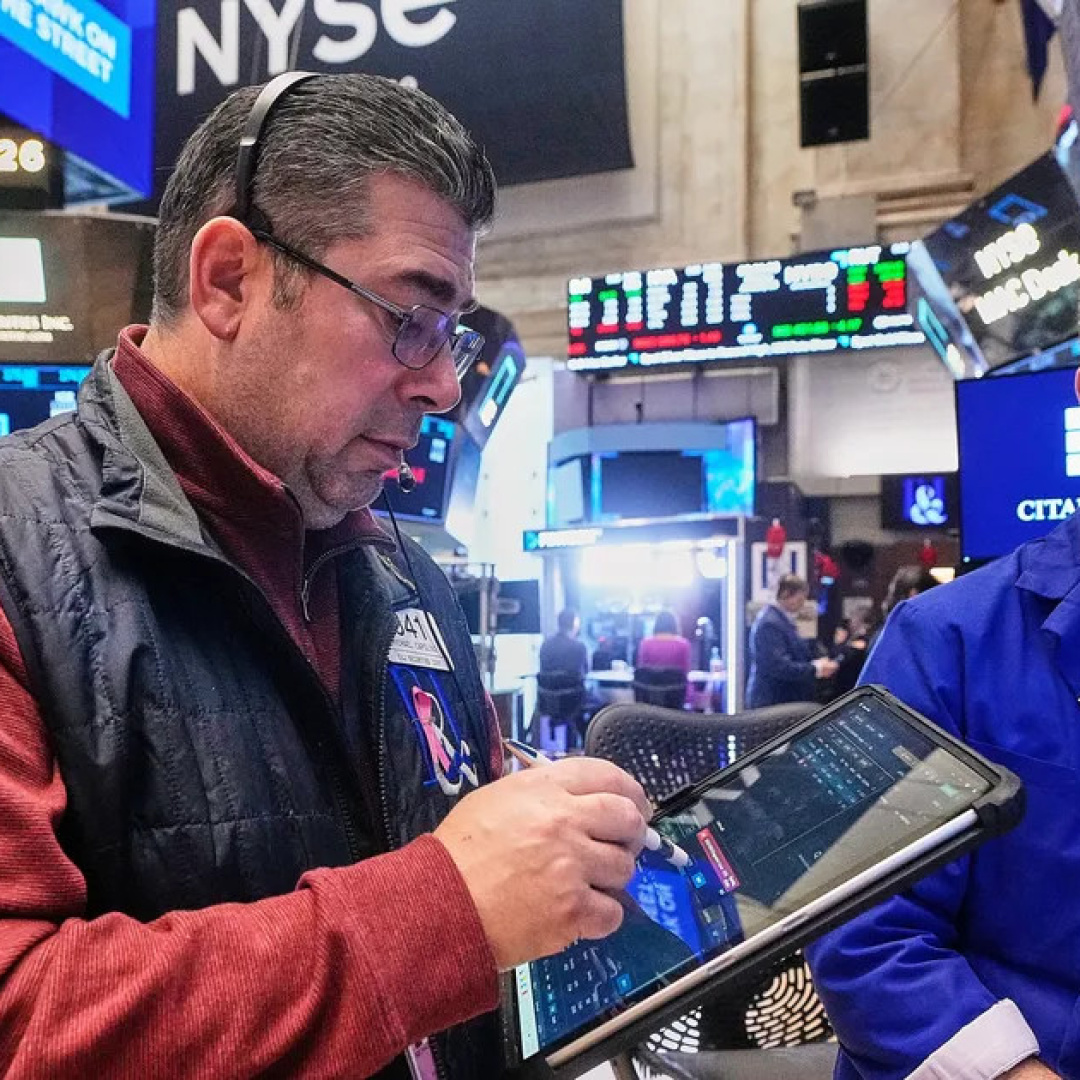
Wall Street staged a remarkable rally on Wednesday, with the Dow Jones Industrial Average climbing more than 1,000 points as investors reacted positively to the Democrats' sweeping victory in the US midterm elections. This political shift is anticipated to bring new constraints on President Donald Trump's economic agenda, leading to a more stable market environment.
The Dow rose by 1,005.68 points, or 1.94%, reaching 52,792.40. The S&P 500 also advanced by 1.29% to 7,666.82, while the technology-heavy Nasdaq gained 1.14% to 25,661.29. However, losses among artificial intelligence and data center companies limited the Nasdaq's overall advance.
For Your Trading Desk
Sponsor Spike Success.
The Democrats' control of both the House of Representatives and the Senate has significantly altered the political landscape in Washington. This outcome is viewed as a setback for Trump, who acknowledged that the conflict with Iran contributed to his party's defeat. He indicated a willingness to collaborate with Democrats, which helped reassure investors concerned about prolonged political confrontations.
Markets are betting that a divided government will limit the administration's ability to implement substantial legislative changes over the next two years. This expectation has encouraged investors to shift their focus from technology companies, which have dominated market gains in recent years, to sectors more closely tied to the broader US economy.
Financial stocks were among the beneficiaries of this market recovery, with Bank of America rising 1.9%. Retail giant Walmart saw a 2% increase, reflecting renewed interest in companies linked to domestic consumer spending. Several major technology firms also advanced, with Amazon climbing 3.7%, while Meta Platforms and Alphabet recorded more modest gains.
Healthcare companies performed particularly well, as investors anticipated a more favorable legislative environment for insurers and hospital operators under the new congressional leadership. UnitedHealth rose 1.4%, Molina Healthcare jumped 6.3%, Centene advanced 4.7%, and HCA Healthcare gained 1.44%.
Renewable energy stocks also benefited from the election outcome, with investors expecting Democratic control of Congress to bolster federal support for clean energy investments. The Invesco Solar ETF climbed approximately 5%, reflecting renewed confidence in the prospects for solar power and other renewable technologies.
Conversely Takes Center Stage
Conversely, businesses closely associated with Trump and his allies faced significant pressure. Companies linked to Elon Musk, who spent nearly $500 million supporting Republican candidates, saw declines. SpaceX shares fell 6.5%, while Tesla dropped 4.7%. Trump Media & Technology Group, the parent company of the Truth Social platform, experienced an even steeper decline of 11%.
The election results also raised concerns for companies involved in artificial intelligence infrastructure. The Democrats' victories have led to fears that new restrictions could hinder the rapid expansion of data centers across the United States. In Texas, where Democrat Gina Hinojosa defeated Republican Governor Greg Abbott, there are worries about a potential moratorium on new data center developments.
Goldman Sachs warned that Democratic victories in state and local elections could result in temporary suspensions of data center construction projects, affecting approximately 45% of planned capacity expansion across the US. Companies like IREN, Hut 8, Applied Digital, and Core Scientific saw their shares drop between 5.2% and 10%.
The mixed performance of the market illustrates the growing distinction investors are making between the long-term potential of artificial intelligence and the immediate financial and regulatory risks associated with developing the necessary infrastructure. Semiconductor stocks also faced selling pressure, despite some companies reporting strong demand for AI-related products.
Corporate earnings provided further support to selected stocks. McDonald's shares gained approximately 2% after reporting adjusted earnings of $3.57 per share, exceeding analysts' expectations. However, its revenue of $7.16 billion fell short of the anticipated $7.29 billion. Payments company Block surged 9.7% after raising its full-year gross profit forecast.
Market Reactions to Election Outcomes and Economic Outlook
The election results triggered substantial movements across currency and bond markets. The US dollar recorded its sharpest daily decline since September, losing ground against all major currencies. The benchmark 10-year Treasury yield fell four basis points to 4.93%, reflecting expectations that a Democratic-controlled Congress could constrain government spending and reduce future borrowing requirements.
For Wall Street, the combination of falling bond yields, a weaker dollar, and stronger equity prices indicates a significant reassessment of the economic outlook following the elections. Investors appear to see opportunities in a political landscape where presidential power faces stronger institutional constraints. However, the contrasting performance of different sectors reveals the potential costs of this political transition, particularly for AI infrastructure and businesses closely associated with Trump.